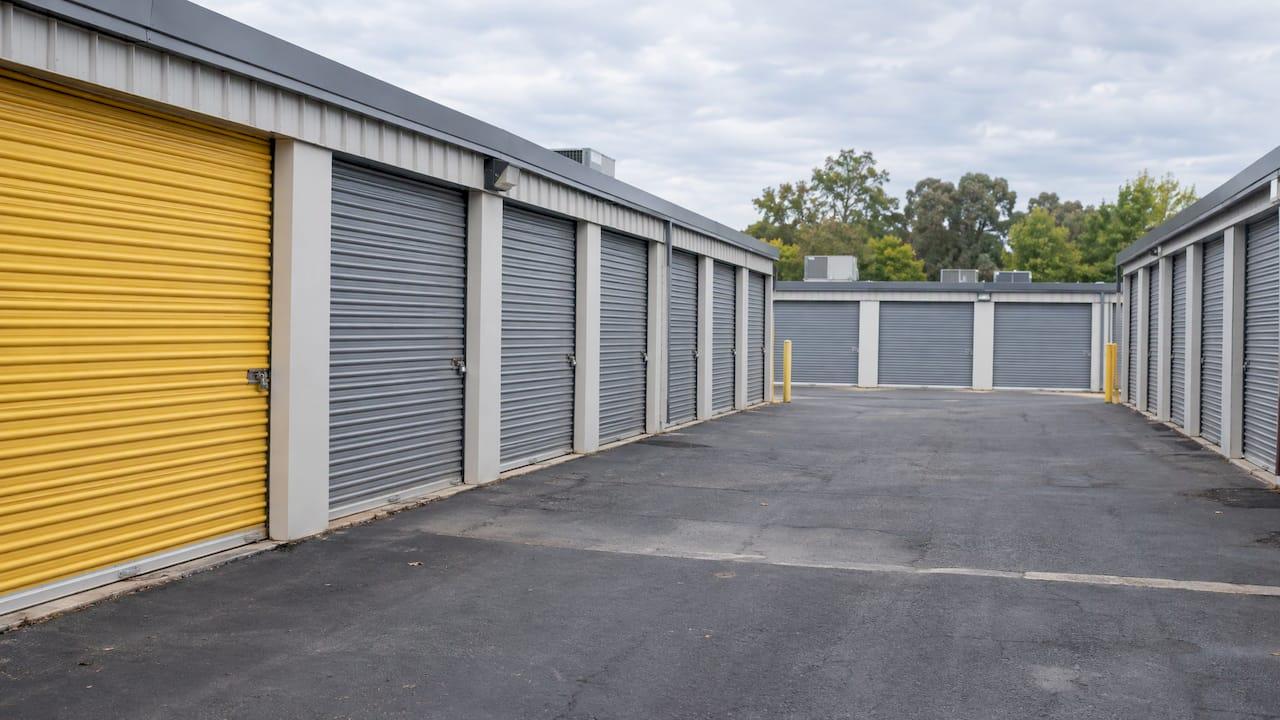
A self-storage bridge loan is short-term, asset-based financing that lets an investor buy, reposition or finish a storage facility before it qualifies for permanent debt. It is built for facilities that do not yet meet a bank's or agency lender's test: low occupancy after purchase, a conversion in progress, a ground-up build in lease-up, or a closing deadline that conventional underwriting cannot meet. Jaken Finance Group publishes a rate range of 8.99-13.5% for its bridge loans and lists no minimum credit score, leverage up to 100% LTC and closings in as few as 7-10 days.
This guide covers when a bridge loan fits a storage deal, how the loan is sized, what it costs, how the exit works and what a lender needs to see.
TL;DR
- A self-storage bridge loan funds the gap between acquiring or building a facility and refinancing it at stabilized occupancy.
- Underwriting centers on the property's value, the business plan and the exit, not on the borrower's credit score.
- Jaken's published bridge rate range is 8.99-13.5%, with leverage up to 100% LTC, deferred payment options and closings in as few as 7-10 days.
- The loan is only as sound as its exit: a refinance into permanent debt, an SBA 504 loan, or a sale.
- Size the loan against the stabilized takeout, not the purchase price alone.
Table of Contents
- What a self-storage bridge loan is
- When a bridge loan fits a storage deal
- Why storage is a workable bridge asset
- How a bridge loan is sized
- What a self-storage bridge loan costs
- The exit: three ways a storage bridge gets repaid
- What a lender needs to see
- Bridge loan versus other storage financing
- Common mistakes in storage bridge deals
- How Jaken structures a storage bridge
- Our perspective
- FAQ
- Sources
What a self-storage bridge loan is
A bridge loan is a short-term real estate loan, usually interest-only, that carries a borrower from one financing event to the next. In storage, that means the period when the asset is acquired or improved but its income is not yet proven.
A few terms used throughout this article:
- LTC (loan-to-cost): the loan amount divided by total project cost, purchase price plus renovation or construction budget.
- LTV (loan-to-value): the loan amount divided by the property's appraised value.
- Lease-up: the period after opening or after a turnaround when units are being rented and occupancy is climbing toward a stable level.
- Stabilization: the point at which occupancy and net operating income have held at a level a permanent lender will underwrite.
- Takeout: the permanent loan or sale that repays the bridge.
Permanent lenders price storage on trailing income. A facility at 40% occupancy has little trailing income, so it does not qualify, however strong the market. The bridge loan covers that period.
When a bridge loan fits a storage deal
Four situations account for most self-storage bridge requests.
Acquiring an under-occupied facility
An owner who has not managed rates, marketing or unit mix often leaves income on the table. A buyer who can fix that pays less than the facility will be worth once stabilized. The seller's trailing numbers will not support a conventional loan on the buyer's price, so the bridge funds the purchase and the buyer raises occupancy and rents.
Finishing a ground-up build in lease-up
A new facility reaches certificate of occupancy with zero or low occupancy. Construction financing ends at completion, and permanent lenders want seasoned income. The bridge covers the months between those two points. If you are still in the building phase, Jaken's page on self-storage construction loans covers that stage, and the comparison of a construction loan vs. a bridge loan shows where one ends and the other begins.
Converting or expanding
Common projects include converting a retail box, warehouse or office building to climate-controlled storage, or adding a second phase of units to an existing site. These jobs involve capital expenditure before the added income exists.

Closing before a deadline
An auction, a motivated seller or an expiring contract can reward whoever closes first. Bank commitments for commercial storage take far longer than a hard money close. Speed is often the reason an investor chooses a bridge even when permanent financing would eventually be available.
Why storage is a workable bridge asset
Storage has low operating complexity compared with other commercial property, and demand has held steady. SpareFoot reported national occupancy at stabilized facilities of 77.0% in Q4 2025, roughly flat on the prior year. Occupancy swings with the season and varies by region, so a lender and a borrower both look at the local submarket, not the national figure.
That figure also shows why a stabilization plan matters. A facility that sits well below its market's occupancy has a visible path to higher income, which is the basis of a value-add bridge.
How a bridge loan is sized
Two numbers drive the loan: the cost basis and the stabilized value.
| Input | What it measures | Why it matters |
|---|---|---|
| Purchase price | Acquisition cost | Starting point for LTC |
| Improvement budget | Renovation, new units, climate control, paving, systems | Added to cost basis; may be funded in draws |
| As-is value | Value today at current occupancy | Caps leverage on LTV-based structures |
| Stabilized value | Value at target occupancy and rents | Determines whether the takeout will repay the bridge |
| Takeout loan amount | Expected permanent loan at stabilization | The test of whether the exit works |
Jaken lists leverage up to 100% LTC on its asset-based programs. In practice that means the loan can cover the full cost of the project when the property and plan support it. Not every deal reaches that ceiling, and a lender sizes each one on its own numbers.
A worked example
The figures below are hypothetical and for illustration only.
An investor buys a 60,000 net rentable square foot facility for $4,000,000 and budgets $500,000 to add climate-controlled units and upgrade the office and access gates. Total cost is $4,500,000. At 80% LTC, the loan is $3,600,000, leaving $900,000 of equity. At 100% LTC the loan would be the full $4,500,000.
If the borrower expects the stabilized facility to appraise at $6,500,000, a permanent loan at 70% LTV would be $4,550,000. That repays either bridge amount, so the exit works on paper. If the stabilized appraisal comes in at $5,000,000, a 70% takeout is $3,500,000, which does not repay a $3,600,000 bridge. The investor would need to bring cash to the refinance. This is the test to run before signing: the takeout must cover the bridge at a conservative stabilized value, not the optimistic one.

What a self-storage bridge loan costs
Costs have four parts.
- Interest rate. Jaken's published range for bridge loans is 8.99-13.5%. Where a deal lands in that range depends on the property, leverage and plan.
- Origination points. A percentage of the loan amount charged at closing.
- Third-party and closing costs. Appraisal, title, legal, insurance and, where applicable, environmental reports.
- Draw and extension fees. Charged when renovation funds are released in stages or when the term is extended.
Bridge loans are typically interest-only, so the monthly cost is the loan balance times the rate divided by 12. On $3,600,000 at 10%, interest is $30,000 a month. During lease-up, that payment is the number that needs a reserve. Jaken lists deferred payment options, which can ease the payment burden while a facility fills; ask for the specific structure when you request terms.
For benchmark context across loan types, Jaken's self-storage loan rates and benchmarks page is a useful place to compare structures, and the bridge loan terms guide explains each term in a bridge term sheet.
The exit: three ways a storage bridge gets repaid
A bridge lender underwrites the exit as closely as the property. Plan the exit before you apply.
Refinance into permanent debt
Once occupancy and net operating income have held, the facility can qualify for longer-term financing. Investors who hold stabilized storage for cash flow typically choose this route. Lenders measure the facility's coverage by DSCR (debt service coverage ratio): net operating income divided by annual debt payments. Jaken's DSCR calculator lets you test the ratio on your projected numbers, and its hard money and DSCR guide to self-storage financing covers the permanent side.
SBA 504 takeout for owner-operators
Owner-operators who will run the facility can pursue the SBA 504 program, which the U.S. Small Business Administration describes as financing for major fixed assets such as real estate. The program has eligibility and timing requirements that favor a facility already in operation, which is why a bridge often comes first. The SBA vs. bridge vs. CMBS decision guide sets the three side by side.
Sale
Some investors buy, stabilize and sell to an institutional or regional operator. The bridge funds the improvement and the sale repays it. This exit depends on market timing, so a plan with a second exit, a refinance, is safer.
What a lender needs to see
Because underwriting is asset-based, the file is about the property and plan. Expect to provide:
- Purchase contract or current ownership documents
- Rent roll, unit mix and trailing operating statements for an existing facility
- Renovation or construction budget and timeline
- Market data on competing facilities, rates and occupancy nearby
- Projected stabilized occupancy, rents and net operating income
- Entity documents and a schedule of your real estate experience
- A written exit strategy
Jaken lists no minimum credit score on its asset-based loans. That does not remove the need for a credible plan: the property, the budget and the takeout carry the file. Borrowers with a track record in storage or commercial property present stronger plans, but first-time storage investors can close when the numbers and project team are sound.
Bridge loan versus other storage financing
| Feature | Bridge loan | SBA 504 | Conventional or CMBS |
|---|---|---|---|
| Typical use | Acquisition, lease-up, conversion | Owner-operated, stable facility | Stabilized, seasoned income |
| Speed to close | Days to weeks | Longer | Longer |
| Underwriting focus | Asset value and plan | Borrower and property | Trailing income |
| Payment | Interest-only, deferral options | Amortizing | Amortizing or interest-only |
| Role | Short-term bridge to exit | Long-term takeout | Long-term takeout |
These are categories, not rankings: each does a different job. The bridge is the one that works when the facility is not yet what the permanent lender wants to see.
Common mistakes in storage bridge deals
- Underestimating lease-up time. Fill rates vary by market and season. Build in extra months of interest.
- Sizing to the optimistic takeout. Test the exit at a conservative appraisal and cap rate.
- Ignoring the interest reserve. Fund enough to carry payments through stabilization.
- Skipping zoning and entitlement checks. A conversion that lacks the right use approval stalls the project.
- Having one exit. Qualify for a refinance and keep a sale as a fallback.
How Jaken structures a storage bridge
Jaken Finance Group lends to real estate investors nationwide, and its loan menu covers bridge loans, fix-and-flip, DSCR rental, new construction and more. For storage owners, the relevant offers are the 8.99-13.5% bridge program, commercial property loans at the same published range, and new construction loans for ground-up builds. Underwriting is asset-based, with no minimum credit score, leverage up to 100% LTC, deferred payment options and closings in as few as 7-10 days.
If you have a facility under contract or in lease-up, send the purchase price, budget and target takeout through Jaken's investor bridge loan page to start a request.

Our perspective
Storage deals fail at the handoff, not at the closing. An investor finds a facility with real upside, but the numbers a permanent lender wants do not exist yet. That is the gap a bridge loan exists to cover.
We underwrite the asset and the plan. A strong storage project with a clear stabilization path should not be held back by a credit score or by a bank's timeline. That is why our programs carry no minimum credit score, leverage up to 100% LTC, deferred payment options and closings in as few as 7-10 days.
Our advice to every storage investor is the same: write the exit first. Know the takeout, test it at a conservative value and fund the interest through lease-up. A bridge with a clear exit is a tool. A bridge without one is a deadline.
Jason Taken
FAQ
Can you get a loan to buy a storage facility?
Yes. Buyers use bridge loans, SBA 504 loans, conventional commercial loans and agency-style or CMBS debt. A bridge suits facilities that are under-occupied, being converted or in lease-up. Jaken's commercial property loans and bridge loans carry a published range of 8.99-13.5%.
How long is a typical self-storage bridge loan term?
Bridge terms are short, commonly 12 to 36 months, sized to the time needed to renovate or lease up and then refinance or sell. Your term sheet states the exact term and any extension options. Match the term to a conservative stabilization schedule.
How much can I borrow on a storage bridge loan?
Leverage depends on cost, value and plan. Jaken lists leverage up to 100% LTC on its asset-based programs, subject to the deal. Test the loan against your expected takeout before you commit.
Does my credit score matter for a self-storage bridge loan?
Jaken lists no minimum credit score on its asset-based loans, so the property, the budget and the exit drive approval. A clear business plan and a credible takeout matter more than a score.
What is the difference between a bridge loan and a construction loan?
A construction loan funds the build in draws. A bridge loan covers the period after completion or acquisition, until permanent financing or a sale. Some projects use both, one after the other.