
Hard money underwriting is asset-first lending analysis: the underwriter evaluates the property's current value, its after-repair value, and the borrower's exit plan instead of building a full income and credit profile. The primary yardstick is leverage against value, typically expressed as loan-to-value or loan-to-ARV, with most lenders capping advances in the 60% to 80% range to preserve an equity cushion. Before applying, run your own numbers: purchase price plus rehab budget against a conservative ARV tells you in five minutes whether a deal clears the bar.
TL;DR:
- Hard money lenders cap loan-to-value and loan-to-ARV ratios between 60% and 80%, with a strong emphasis on property value and exit strategy.
- Their underwriting process prioritizes valuation, leverage calculations, and liquidity verification, often conducted in parallel to speed closes within days.
- Accurate, recent comps and a detailed rehab budget with contingencies significantly reduce valuation disputes and accelerate approval.
- Complete, well-organized submission packages with clear comps, budgets, bank statements, and exit plans minimize delays and improve approval speed.
Table of Contents
- What Makes Hard Money Underwriting Different From Conventional Loans?
- What Is the Step-by-Step Underwriting Process for Hard Money Loans?
- How Do Lenders Determine ARV and Comparable Value?
- What Are the Key Leverage Ratios in Hard Money Underwriting?
- What Documents Do Hard Money Lenders Require From Borrowers?
- How Does Underwriting Change by Loan Scenario?
- What Do Hard Money Loans Typically Cost?
- How Can Borrowers Submit a Fundable Hard Money File?
- Exit Strategy and Timeline: Sale, Refinance, or Rental?
- How Do Hard Money Lenders Assess Deal Risk?
- How Do Local Market Conditions Affect Hard Money Underwriting?
- What Legal and Regulatory Factors Apply to Hard Money Lending?
- An Underwriter's View on Speed, Risk, and Submission Quality
- How Jaken Finance Group Structures Underwriting Around Speed
- Sources
- FAQ
What Makes Hard Money Underwriting Different From Conventional Loans?
Conventional mortgage underwriting builds a complete borrower profile: two years of tax returns, W-2s, debt-to-income calculations, and a FICO-driven pricing grid. Hard money underwriting flips that order. The property carries the risk, so the collateral and the exit strategy drive the decision, not the borrower's full financial history.
That distinction shows up in what gets requested and what gets skipped. A conventional underwriter wants pay stubs and an appraisal ordered through a management company with a multi-week turnaround. A hard money underwriter wants a broker price opinion, a rehab scope, and proof the borrower has cash to close and carry the property to completion. Speed is the point: investors chasing a 30-day closing on a distressed property cannot wait on conventional timelines, and hard money lenders build their entire process around compressing weeks into days.
Credit and income are not ignored entirely. Most hard money lenders still pull a credit report, but they read it differently than a bank does.
- Judgments and open liens against the borrower's entity or personal name often stop a file cold, since they signal collection risk that collateral alone can't offset.
- Bankruptcy within the last 12 to 24 months typically triggers additional scrutiny or an outright decline, depending on discharge status.
- A thin or damaged credit file usually adjusts pricing rather than killing the deal. Weak credit tends to work as a pricing lever, with lenders offsetting it through higher rates, lower leverage, or larger reserve requirements.
- No verifiable exit plan disqualifies borrowers regardless of credit score, because the lender has no repayment story to underwrite against.
The real disqualifiers in hard money underwriting are almost always deal-level: insufficient equity cushion, an unrealistic ARV, or a borrower who can't document cash to close. Personal credit matters, but it rarely carries the file the way it does at a bank.
What Is the Step-by-Step Underwriting Process for Hard Money Loans?
Every hard money lender runs some version of the same sequence, even when the paperwork looks different from one shop to the next. Understanding the order helps you prepare documentation before the underwriter asks for it, which shaves days off the timeline.
- Valuation and ARV analysis. The underwriter orders a broker price opinion or appraisal and reviews the borrower's proposed after-repair value against recent, comparable closed sales. This step sets the ceiling for everything that follows.
- Leverage math. Once value is established, the underwriter calculates loan-to-value on the purchase, loan-to-cost including rehab dollars, and loan-to-ARV on the finished product. Hard money lenders commonly cap advances around 60% to 80% of value or ARV, and they underwrite the collateral before anything else.
- Liquidity verification. Bank statements get pulled, usually two to three months' worth, to confirm the borrower actually has the cash-to-close plus reserves the deal requires.
- Experience and exit credibility. The underwriter checks whether the borrower has completed similar projects and whether the stated exit (sale, refinance, or rental hold) is realistic for the property type and market.
- Title, insurance, and closing readiness. A title search confirms clean ownership and no undisclosed liens, while insurance requirements get confirmed before the file moves to closing.
By the numbers: DSCR targets on rental underwriting commonly land in the 1.10x to 1.25x range, meaning the property's rental income needs to cover the mortgage payment with at least 10% to 25% headroom before a lender signs off.
Steps one and two do the heaviest lifting. If the ARV is inflated or the requested loan exceeds the lender's leverage cap, nothing else in the file matters. Underwriters who see this early often decline or counter with lower proceeds, before spending time on liquidity or title review.
Where hard money underwriting compresses time is in parallel processing. A conventional underwriter often waits for one step to finish before starting the next. Hard money shops frequently run valuation, liquidity checks, and title work simultaneously, which is part of why closings measured in days rather than weeks are realistic when the file is complete on day one. Borrowers who submit a partial package (missing comps, no rehab budget, unclear entity documents) force the underwriter back into a sequential process, which is the single biggest avoidable cause of delay.
How Do Lenders Determine ARV and Comparable Value?
Valuation is where most hard money files either move forward cleanly or stall. Lenders lean on three tools, and knowing which one applies to your deal changes how you prepare your package.
A broker price opinion (BPO) is a licensed real estate agent's written value estimate based on comparable sales, typically turned around in 24 to 72 hours. It costs less than a full appraisal and is common on smaller loan amounts or time-sensitive deals. A full appraisal follows formal valuation methodology, as outlined in standard appraisal and valuation practice, and carries more weight on larger loans or when the lender plans to sell the loan later. A comp set the borrower assembles as a starting point helps frame expectations, but it's never the final word since the underwriter or third-party valuator makes the independent call.
Choosing comps that survive scrutiny means:
- Pulling sales within a half-mile radius and, ideally, the same subdivision or block.
- Limiting the comp window to the last 90 to 180 days, since older sales lose relevance in shifting markets.
- Matching square footage, bedroom and bathroom count, and lot size within a reasonable band, not cherry-picking the highest sale on the street.
- Adjusting for condition differences honestly. If your subject property will have a renovated kitchen and the comp already had one, that's a wash, not an upgrade.
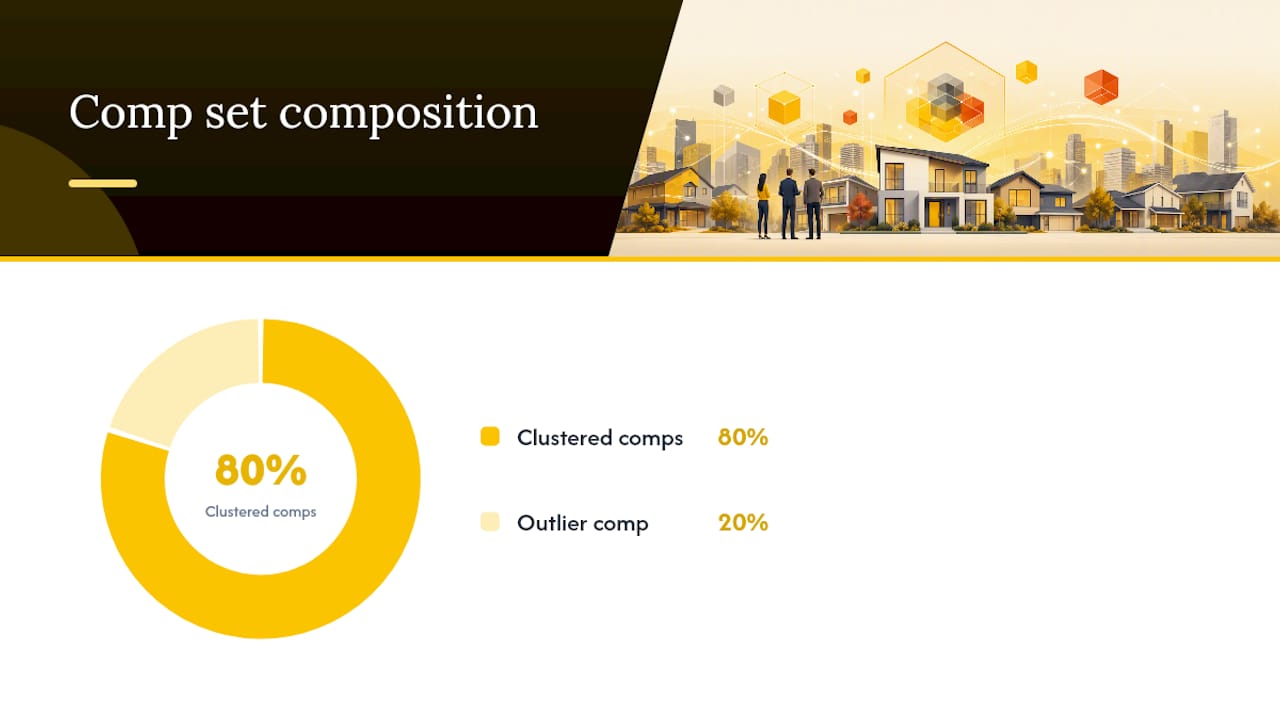
Pro Tip: Underwriters favor tight, conservative comp sets over inflated ones. A clustered group of similar sales that support a modest ARV closes faster than an aggressive number backed by one outlier sale three towns over.
A practical example: if four comps within a quarter mile sold between $310,000 and $325,000 in the last 120 days, and one outlier sold for $360,000 after a full gut renovation your budget doesn't match, the underwriter will anchor to the $310,000 to $325,000 range and likely discount your ARV request if you cited the $360,000 sale as your primary support. Building your rehab budget to match the finish level of your actual comps, not your best-case comp, is the fastest way to avoid a valuation dispute mid-file.
What Are the Key Leverage Ratios in Hard Money Underwriting?
Three ratios govern almost every hard money underwriting decision, and each measures something different.
Loan-to-value (LTV) compares the loan amount to the property's current as-is value. It's most relevant on refinance transactions or when a lender is underwriting a stabilized asset rather than a rehab project.
Loan-to-cost (LTC) compares the loan amount to the borrower's total project cost, meaning purchase price plus rehab budget. This ratio matters most on fix-and-flip and new construction deals, since it measures how much of the borrower's total outlay the lender is financing versus how much equity the borrower brings in cash.
Loan-to-ARV compares the loan amount to the projected after-repair value. This is the ratio most fix-and-flip lenders lean on hardest, because it caps exposure against the property's future value rather than its current, often distressed, condition.
By the numbers: Hard money lenders commonly cap total advances between 60% and 80% of value or ARV, depending on deal type, borrower experience, and property condition. A borrower requesting proceeds at the top of that range typically needs a strong track record and a well-supported ARV to get approved there.
Here's how the math plays out on a typical fix-and-flip scenario. Say a property has a purchase price of $200,000, a rehab budget of $50,000 (total project cost of $250,000), and a supported ARV of $340,000. If that same lender also caps LTC at 90%, the ceiling becomes $225,000 instead, whichever ratio produces the lower number generally wins.
Rehab dollars rarely fund upfront. Most hard money lenders structure rehab as a draw schedule, releasing funds in stages as work completes and gets inspected. This protects the lender against a borrower who takes rehab money and stalls, and it means your cash flow planning needs to account for paying contractors out of pocket between draws.

What Documents Do Hard Money Lenders Require From Borrowers?
Liquidity documentation carries more weight in hard money underwriting than almost any other borrower-side factor, because the lender needs proof you can close and carry the deal, not just that you qualify on paper.
Most lenders request two to three months of bank statements across all accounts tied to the transaction. Underwriters reconcile average daily balances and recurring debits, a process that often surfaces undisclosed debt or loan stacking that a borrower didn't mention in the application. A statement showing large, unexplained deposits right before application, or recurring payments to another private lender, will trigger follow-up questions before anything moves forward.
Reserve requirements scale with deal complexity:
- Straightforward fix-and-flip deals commonly require reserves covering several months of carrying costs (interest, taxes, insurance) beyond the cash-to-close.
- New construction and larger rehabs typically require higher reserves given longer timelines and greater cost-overrun risk.
- Rental/DSCR loans often require reserves sized to a set number of months of the proposed mortgage payment, since there's no rehab exit to rely on if a tenant doesn't materialize quickly.
Beyond bank statements, expect to provide entity documents if you're borrowing through an LLC: articles of organization, an operating agreement, and a certificate of good standing. Title work runs in parallel, with the underwriter reviewing a preliminary title report for liens, judgments, or ownership defects, while insurance requirements (typically full replacement cost coverage) get confirmed before the closing date is locked. Missing entity paperwork or an unresolved title exception are two of the more common last-minute delays borrowers don't anticipate.
How Does Underwriting Change by Loan Scenario?
Hard money underwriting isn't one process. The metrics that matter shift depending on what you're financing, and knowing which ratios your lender will emphasize helps you build the right file from the start.
Fix-and-flip loans are almost entirely ARV-driven. Borrower experience matters here more than in most other scenarios, since a first-time flipper requesting the same leverage as someone with a dozen completed projects will usually see a lower advance or a smaller rehab budget approved upfront.
Rental and DSCR loans shift the entire underwriting focus to the property's income. The debt service coverage ratio, calculated as monthly rental income divided by the monthly mortgage payment, is the number that decides the deal. Lenders typically target DSCR ranges of 1.10x to 1.25x, and they verify rent through an executed lease, a market rent survey, or both. For flip-to-rental strategies, underwriters often also confirm the finished property can support a refinance into a DSCR loan later, testing the eventual exit even before construction starts.
Bridge and new construction loans add cost control on top of everything else. Underwriters scrutinize the construction budget line by line, structure draws around completion percentages rather than flat calendar dates, and build in stabilization assumptions for lease-up or sale timing after the build finishes. New construction files typically face more conservative leverage than a light rehab, simply because more can go wrong between groundbreaking and a certificate of occupancy.
What Do Hard Money Loans Typically Cost?
Pricing in hard money underwriting reflects risk and speed, not a borrower's ability to shop for the lowest advertised rate. Most hard money loans run short terms of six to 24 months and carry higher interest rates and upfront points than a conventional mortgage, because the lender is pricing both collateral risk and the cost of moving fast.
Typical structures include:
- Interest rates that run well above conventional mortgage rates, reflecting the short duration and asset-based risk. Jaken Finance Group's own fix-and-flip and bridge loan pricing runs from 8.99% to 13.5%, while its DSCR rental loans price lower, from 5.75% to 10.5%, reflecting the reduced risk of a stabilized, income-producing asset.
- Origination points, usually charged as a percentage of the loan amount at closing, on top of the interest rate.
- Term lengths matched to the exit strategy. A fix-and-flip loan sized for a six-month rehab and sale needs a term that gives realistic breathing room past the target completion date, not one that expires the week the paint dries.
By the numbers: Weak underwriting inputs, thin equity, spotty credit, or an unverifiable exit, don't usually kill a hard money deal outright. They shift the price. A borrower with thinner equity or credit issues typically sees a rate toward the higher end of a lender's range, a lower leverage cap, or both, rather than an automatic decline.
Term length deserves more attention than most borrowers give it. Exiting a hard money loan late, whether the sale falls through or the refinance takes longer than expected, usually triggers extension fees or default interest. Building a buffer of at least 60 to 90 days beyond your realistic completion timeline into the loan term protects your margin far more than chasing the lowest advertised rate.
How Can Borrowers Submit a Fundable Hard Money File?
Most declines and delays in hard money underwriting trace back to a handful of repeatable mistakes, and nearly all of them are fixable before you ever submit.
- Inflated ARV with weak comp support. Fix this by anchoring your value estimate to three to five tight, recent comps rather than one favorable outlier.
- Missing or vague rehab budget. A one-line "renovation: $40,000" invites questions. A line-item budget with a contingency reserve moves faster.
- Unverifiable cash to close. Submit clean bank statements upfront rather than waiting for the underwriter to ask, and be ready to explain any large or irregular deposits before they get flagged.
- No clear exit plan. State plainly whether you're selling, refinancing, or holding as a rental, and back it with market data (comps for a sale, rent survey for a hold).
- Incomplete entity paperwork. Have your operating agreement and certificate of good standing ready if you're closing in an LLC, since chasing these documents mid-file is a common closing delay.
A complete submission package, meaning clear comps, a detailed budget, bank statements, and a concise exit narrative, materially speeds decisions compared to a partial file that forces the underwriter to chase missing pieces one at a time.
Pro Tip: Build a one-page cover sheet for every submission: property address, purchase contract, rehab budget summary, comp list, two months of bank statements, and a two-sentence exit plan. Lenders who see organized files first often move them to the front of the underwriting queue simply because there's less back-and-forth required.
Jaken Finance Group evaluates files against these same fundamentals, focusing on the property's value, condition, and the borrower's exit strategy rather than building a full income-verification file the way a bank would. Asset-based underwriting built around speed is the core of how the company structures its review, which is part of why closings in as few as five to ten days are realistic when a borrower shows up with a complete package on day one.
Exit Strategy and Timeline: Sale, Refinance, or Rental?
The exit strategy is the single input that shapes every other underwriting decision, because it tells the lender how the loan actually gets repaid. Hard money underwriting treats a sale exit, a refinance exit, and a rental hold as three distinct risk profiles, even on properties with identical purchase prices.
A sale exit puts weight on ARV accuracy and current market absorption. If comparable homes in the area are sitting on the market for 90-plus days rather than selling in three weeks, an underwriter will often ask for a longer loan term or a lower advance to build in a cushion for a slower sale.
A refinance exit shifts the underwriting focus toward whether the finished property can support the next loan. For a flip-to-rental strategy, that means testing the DSCR math on the anticipated refinance before construction even starts, since a property that rehabs beautifully but can't cash-flow enough to refinance leaves the borrower stuck holding a maturing hard money loan with no exit.
A rental hold without a refinance in the near term is the least common structure in short-term hard money lending, since the loan's short duration and higher rate make it an expensive way to hold long-term. Most borrowers planning to hold long-term use a rental hold only as a bridge into a DSCR refinance within the first six to 12 months.
Timeline mismatches, a loan term that expires before the sale closes or the refinance funds, are among the most preventable underwriting failures. Padding your term by 60 to 90 days past your realistic completion date costs little upfront and avoids default interest or a scramble for a bridge extension later.
How Do Hard Money Lenders Assess Deal Risk?
Risk assessment in hard money underwriting works differently than the statistical credit-scoring models banks rely on. Instead of weighting a FICO score against a debt-to-income ratio, hard money lenders build a layered assessment around the collateral, the borrower's execution history, and the deal's margin for error.
Collateral risk comes first: does the property have enough spread between total project cost and supported ARV to absorb a valuation miss or a slower-than-expected sale? A deal that still pencils under that scenario is far safer than one that only works at the exact projected number.
Execution risk looks at whether the borrower has the track record and the trade relationships to actually complete the scope of work on budget and on time. A borrower with three completed flips in the last two years underwrites very differently than a first-timer proposing a full gut renovation, even on an identical property.
Market risk factors in how quickly the finished product will move, whether that's a sale or a lease-up. This is where local absorption rates, days-on-market trends, and rental vacancy data feed into the underwriting decision alongside the property-specific numbers.
Layering these three risk categories, rather than relying on a single score, is what allows hard money underwriting to move fast without ignoring the factors that actually predict whether a loan gets repaid.
How Do Local Market Conditions Affect Hard Money Underwriting?
Local market data shapes nearly every underwriting decision on a hard money file, sometimes more than the borrower's own financial profile. A property in a market with rising days-on-market and shrinking comp counts gets underwritten more conservatively than an identical property in a fast-absorbing neighborhood, regardless of the borrower's credit or experience.
Underwriters pay close attention to a few local indicators. Absorption rate, how quickly comparable listings sell, tells the lender whether a sale exit is realistic within the proposed loan term. Rental vacancy rates and rent trends matter heavily on DSCR deals, since a market with softening rents can push a property's actual income below the underwriter's projected DSCR even if the loan closed at an acceptable ratio.
Seasonal and regional variation adds another layer. A rehab timeline in a market with a short construction season, due to winter weather, permitting backlogs, or labor shortages, needs a longer term than the same scope in a market that builds year-round. Underwriters familiar with a given metro often adjust rehab timelines and contingency expectations based on patterns they've seen repeatedly in that specific market, which is part of why local lending experience carries real weight even in an asset-based model.
Property tax reassessments and insurance cost spikes in certain states have also pushed some underwriters to build larger carrying-cost reserves into deals in markets where those costs have moved sharply in recent years. A borrower working in a market with volatile insurance pricing should expect the underwriter to ask pointed questions about how that cost was estimated in the project budget.
What Legal and Regulatory Factors Apply to Hard Money Lending?
Hard money loans generally fall under different regulatory treatment than conventional consumer mortgages, largely because most hard money loans are extended to business entities or investment purposes rather than owner-occupied primary residences. That distinction matters: loans for business or investment purposes are typically exempt from many of the consumer protection rules, such as certain Truth in Lending Act disclosures, that govern owner-occupied residential lending.
This exemption is precisely why most hard money lenders require the property to be non-owner-occupied and often require borrowers to close in an LLC or other business entity. A borrower attempting to use hard money financing to buy a primary residence will find far fewer lenders willing to originate the loan, and the ones that do will underwrite it under stricter consumer-lending rules.
State-level licensing requirements for hard money and private lenders vary considerably. Some states require a specific lending license to originate these loans, while others regulate them under broader mortgage broker or lender licensing frameworks. Usury laws, which cap the maximum interest rate a lender can charge, also vary by state and can affect how a loan gets structured, particularly on smaller loan amounts where points and fees make up a larger share of total cost.
Title and lien priority rules matter just as much as lending regulation. An underwriter's title review confirms the lender's position will be first-lien (or properly subordinated in a second-position structure) and free of undisclosed judgments that could complicate foreclosure if the loan ever defaults. Borrowers working across multiple states should expect closing requirements, and sometimes entity structuring requirements, to shift from one jurisdiction to the next.
An Underwriter's View on Speed, Risk, and Submission Quality
Files move fast when the borrower does the underwriter's job for them before they ask. The single biggest lever a borrower controls isn't credit score or experience level, it's whether the comp set, rehab budget, and bank statements arrive complete and consistent with the numbers on the purchase contract.
Borrowers who shave real days off their closing timeline tend to do one thing differently: they submit a rehab budget that matches their comps' finish level, not their best-case ARV. A $340,000 ARV supported by comps with updated kitchens and baths, paired with a rehab budget that actually includes a kitchen and bath renovation, closes faster than a mismatched file where the numbers tell two different stories.
Weak credit rarely stops a deal on its own. A thin exit plan does. Underwriters can price around a 580 credit score. They can't underwrite around a borrower who hasn't decided whether they're selling or renting.
— Jason Taken
How Jaken Finance Group Structures Underwriting Around Speed
Everything covered above, the ARV math, the leverage caps, the liquidity checks, points to the same conclusion: the faster and more complete your file arrives, the faster the underwriting decision follows. Some lending models are built around underwriting the property and the exit plan first rather than requiring the full income-documentation process a bank demands, enabling closings in as few as five days for well-prepared borrowers.
The product lineup matches the scenarios covered throughout this guide. Fix and Flip Loans price between 8.99% and 13.5% and follow the ARV-driven underwriting process described above, while DSCR Rental Loans run from 5.75% to 10.5% for borrowers underwriting a stabilized rental exit. Investors juggling a timing gap between a sale and a purchase can look at Bridge Loans in the same 8.99% to 13.5% range, and ground-up builders can review New Construction Loans priced identically. Investors exploring maximum leverage structures can also review the 100% LTC fix-and-flip program details to see how higher advance rates get structured against a deal's cost basis.
Before applying, pull together the file this article walked through: purchase contract, line-item rehab budget, comp set, two to three months of bank statements, and a one-paragraph exit plan. Start your review at Jaken Finance Group's loan options page to match your scenario to the right product and get underwriting started.
Sources
For a foundational overview of how hard money loans function and why they carry short terms and higher pricing, the Wikipedia entry on hard money loans offers a clear starting point. Rocket Mortgage's breakdown covers typical leverage caps and use cases in more consumer-facing detail, while LenderAnalyzer's underwriting explainer digs into DSCR targets and liquidity verification methods referenced throughout this guide.
Borrowers wanting a deeper look at fix-and-flip specific underwriting can review Jaken Finance Group's fix-and-flip underwriting primer and its broader financing guide for 2026.
- Hard money loan — Wikipedia
- Hard money loans: How they work, and when to use them | Rocket Mortgage
- Hard Money Loan Underwriting Explained - LenderAnalyzer
- Hard Money Underwriting: What Lenders Look For — Ambition Lending
FAQ
Who Are the Top Hard Money Lenders in the US?
There's no single official ranking of top hard money lenders, since the market is fragmented across national, regional, and local players with different specialties. Rather than chasing a "top five" list, compare lenders on leverage caps, speed to close, and whether their loan products (fix-and-flip, DSCR, bridge, construction) match your specific deal.
How Hard Is It to Get Approved for a Hard Money Loan?
Approval hinges far more on the deal than on the borrower. A property with a realistic ARV, adequate equity cushion, and a documented exit plan typically gets approved even with imperfect personal credit, since weak credit usually functions as a pricing lever rather than an automatic decline.
What Is the 70% Rule for Hard Money Loans?
Many hard money lenders' actual leverage caps land in a broader 60% to 80% range of value or ARV depending on deal type, borrower experience, and property condition.
How Much Do Hard Money Lenders Usually Charge?
Hard money loans typically carry higher interest rates than conventional mortgages plus upfront origination points, reflecting the short loan terms and collateral-based risk lenders take on. Jaken Finance Group's fix-and-flip, bridge, and new construction loans price between 8.99% and 13.5%, while DSCR rental loans price lower, between 5.75% and 10.5%, reflecting reduced risk on a stabilized asset.
What Documents Speed Up Hard Money Underwriting the Most?
A tight comp set, a line-item rehab budget with contingency, two to three months of bank statements, and a one-paragraph exit plan resolve most underwriter questions before they're even asked. A complete submission package consistently closes faster than a partial file the underwriter has to chase piece by piece.