
A finished flip can move into three refinance lanes: cash-out for immediate capital, rate-and-term for a lower payment on debt you're keeping, or a DSCR loan to convert the property into a rental. All three require the same gating condition: a fully completed rehab, an appraisal that supports the after-repair value, and rent or debt-service math that meets lender requirements. Skip any one of those and the file stalls before it starts.
TL;DR:
- A property must be fully finished, appraised at or above ARV, and meet rent or debt-service criteria before refinancing can proceed.
- Cash-out refinancing is viable when ARV offers enough equity to stay within 70-75% LTV caps, ensuring meaningful proceeds.
- Rate-and-term refinance suits when the goal is lower monthly payments without extracting cash, especially if ARV margins are tight.
- DSCR loans require rent or lease income to cover 100% to 125% of the monthly debt payment, focusing solely on property income rather than personal finances.
- Refinancing eligibility depends heavily on seasoning rules, with some lenders allowing immediate refinance post-rehab, while others require 90 to 180 days of title holding.
Table of Contents
- Which refinancing path fits your flip right now?
- When can you refinance after a flip?
- DSCR refinancing: how the qualifying math actually works
- Cash-out and rate-and-term after renovation: what changes
- How to prepare your refinance file after finishing a flip
- How to calculate your refinance numbers: LTV, ARV, and cash-out proceeds
- What kills a refinance file and how to fix it early
- How to choose the right refinance path: a decision framework
- How Jaken Finance Group supports flip refinance strategies
- A practical lender's view on refinance versus sell
- Ready to refinance your completed flip?
- Sources
Which refinancing path fits your flip right now?
Match your goal to the property's numbers before you call a lender. Each path answers a different question, and picking the wrong one wastes an appraisal fee and weeks of underwriting.
Cash-out refinance works best when your after-repair value (ARV) comfortably exceeds your total cost basis. If you bought at $180,000, spent $60,000 on rehab, and the appraisal comes back at $320,000, you likely have enough spread to pull meaningful cash while staying under the lender's loan-to-value (LTV) cap. Most conventional and portfolio lenders cap cash-out refinances on single-family investment property around 70% to 75% LTV, according to NerdWallet's breakdown of fix-and-flip financing options.
Rate-and-term refinance fits when you're not chasing cash. You just want to swap a high-cost hard money loan for a lower, longer-term product. This preserves equity rather than extracting it, which matters if your ARV margin is thin.
DSCR refinance is the move when you've decided to hold the property as a rental instead of selling. Underwriting hinges on whether market or lease rent covers the new payment, not on your personal income.
- Cash-out: best when ARV minus payoff and costs still leaves substantial equity; typical caps run 70% to 75% LTV on SFR.
- Rate-and-term: best when the goal is a lower monthly cost, not liquidity; often allows slightly higher LTV since no cash leaves the deal.
- DSCR: best when projected rent supports the payment at a ratio most lenders set between 1.00 and 1.25, per LendFriend Mortgage's DSCR refinance guidance.
Immediate disqualifiers include unfinished punch-list items, weak or thin comparable sales, and, for DSCR, no lease and no credible rent comp. Apply after those gaps are closed, not before.
When can you refinance after a flip?
Seasoning rules and appraisal timing decide whether you're financing this month or three months from now. Lenders group their seasoning requirements into a few common buckets, and the bucket you land in depends heavily on the lender type, not just the loan product.
- No-seasoning or immediate refinance. Some portfolio and DSCR-focused lenders will refinance the day rehab wraps, using the new appraised value rather than your original purchase price. This is common among lenders built specifically for investor exits.
- Three-month seasoning. A meaningful share of conventional and non-QM lenders require the title to have been held for at least 90 days before they'll use the new appraisal instead of the purchase price.
- Six-month seasoning. Some agency-adjacent and bank portfolio products still hold to a six-month minimum, which can force you to carry hard money interest longer than planned.
Order the final appraisal only after every permit is closed out and the punch list is done. An appraiser who walks into a property with open permits or visible unfinished trim work will flag it, and that flag can knock thousands off the valuation or trigger a full re-inspection later.
Rate environment and local rental demand should factor into the refinance-versus-sell decision too. Mortgage rate trends tracked in the Federal Reserve's G.19 report on outstanding mortgage debt shift the math on whether a DSCR refinance still cash flows at today's rate, or whether selling and redeploying capital into the next flip makes more sense.
DSCR refinancing: how the qualifying math actually works
DSCR stands for debt service coverage ratio, and it is the single number that determines whether a rental refinance gets approved. The formula is simple: monthly qualifying rent divided by monthly PITIA (principal, interest, taxes, insurance, and association dues if applicable).
By the numbers: Most DSCR programs set a minimum ratio between 1.00 and 1.25, meaning rent needs to cover 100% to 125% of the full housing payment before the loan clears underwriting, according to LendFriend Mortgage.
Worked example: Say your flip rents for $2,400 a month, either on a signed lease or a market-rent estimate from a Fannie Mae Form 1007 rent schedule. If your new PITIA lands at $2,100, your DSCR is 2,400 ÷ 2,100, or 1.14. That clears most lenders' 1.00 to 1.25 threshold with room to spare. Drop the payment through an interest-only structure, and the ratio improves further since principal isn't part of the divisor.
DSCR underwriting focuses on the property's income rather than your personal tax returns, which is precisely why it works for flippers who show heavy write-offs, according to research from LendFriend Mortgage. That said, documentation still matters:
- A rent schedule or signed lease establishing qualifying rent.
- Proof the property is finished and in rentable, code-compliant condition.
- Insurance and property tax figures baked into the PITIA calculation, not estimated separately.
- Cash reserves, often two to six months of payments depending on the lender.
Lender selection comes down to seasoning flexibility and reserve requirements. Portfolio and DSCR-specialty lenders tend to be more forgiving on seasoning than agency-adjacent shops, but they may ask for larger reserves in exchange. A DSCR loan for investment property program built around investor exits typically spells out both trade-offs up front rather than surprising you mid-file.
Cash-out and rate-and-term after renovation: what changes
Both products replace your existing debt, usually the hard money loan that funded acquisition and rehab, with a new mortgage sized off the appraised value instead of the purchase price. The difference is what happens to the gap between the new loan and the payoff.
In a cash-out refinance, that gap becomes proceeds in your account. In a rate-and-term refinance, there is no gap by design. You're simply moving the same balance to better terms.
- LTV caps for cash-out on single-family investment property commonly max out around 70% to 75%, though programs vary, per NerdWallet's fix-and-flip loan overview.
- Closing costs on both products typically run 2% to 5% of loan amount, covering appraisal, title, origination points, and recording fees.
- Rate-and-term makes more sense when your ARV margin is tight and pulling cash would push you close to the LTV ceiling, since that leaves no cushion if the appraisal comes in soft.
One note on program eligibility: government-backed rehab products like the HUD 203(k) Rehabilitation Mortgage generally require owner-occupancy, which rules them out for most investment flips regardless of how attractive the terms look on paper. Investors sometimes ask about 203(k) refinancing and waste a week finding out it doesn't apply to them.
How to prepare your refinance file after finishing a flip
A clean submission closes faster and avoids the underwriting back-and-forth that stalls files for weeks. Follow this sequence rather than sending documents piecemeal.
- Confirm your lender's seasoning rule first. Calling before you order an appraisal saves you from paying for one the lender won't accept yet.
- Finish every permit and punch-list item. Order the appraisal only once the property is 100% complete, since an appraiser who sees open permits will discount value or delay the report.
- Assemble the document package in full before submitting. Send everything at once rather than trickling it in.
- If pursuing DSCR, get a signed lease in hand. A signed lease generally strengthens your qualifying rent more than a market-rent estimate alone.
- Confirm insurance coverage matches lender requirements before closing, including dwelling coverage amounts and, if applicable, landlord liability.
Your document checklist should include: the final appraisal, contractor invoices and lien waivers, permit sign-offs, before-and-after photos, title report, insurance binder, the settlement statement from your original purchase, bank statements showing reserves, and entity formation documents if you're vesting the property in an LLC.
Pro Tip: Negotiate and settle any known contractor holdbacks before the appraiser shows up. An appraiser who spots an unpaid punch-list item, even a minor one, can flag the report as "subject to completion," which forces a second inspection and adds two to three weeks to your closing timeline.

Investors researching fix-and-flip financing strategies often underestimate how much a well-organized file speeds up the underwriting decision compared to sending documents as they trickle in.
How to calculate your refinance numbers: LTV, ARV, and cash-out proceeds
Three formulas cover almost every refinance decision on a flip. Run them before you talk to a single lender, because they tell you whether the deal even qualifies for the path you want.
LTV = loan amount ÷ appraised value. If a lender caps cash-out at 75% LTV and your appraisal comes back at $320,000, the maximum loan is $240,000.
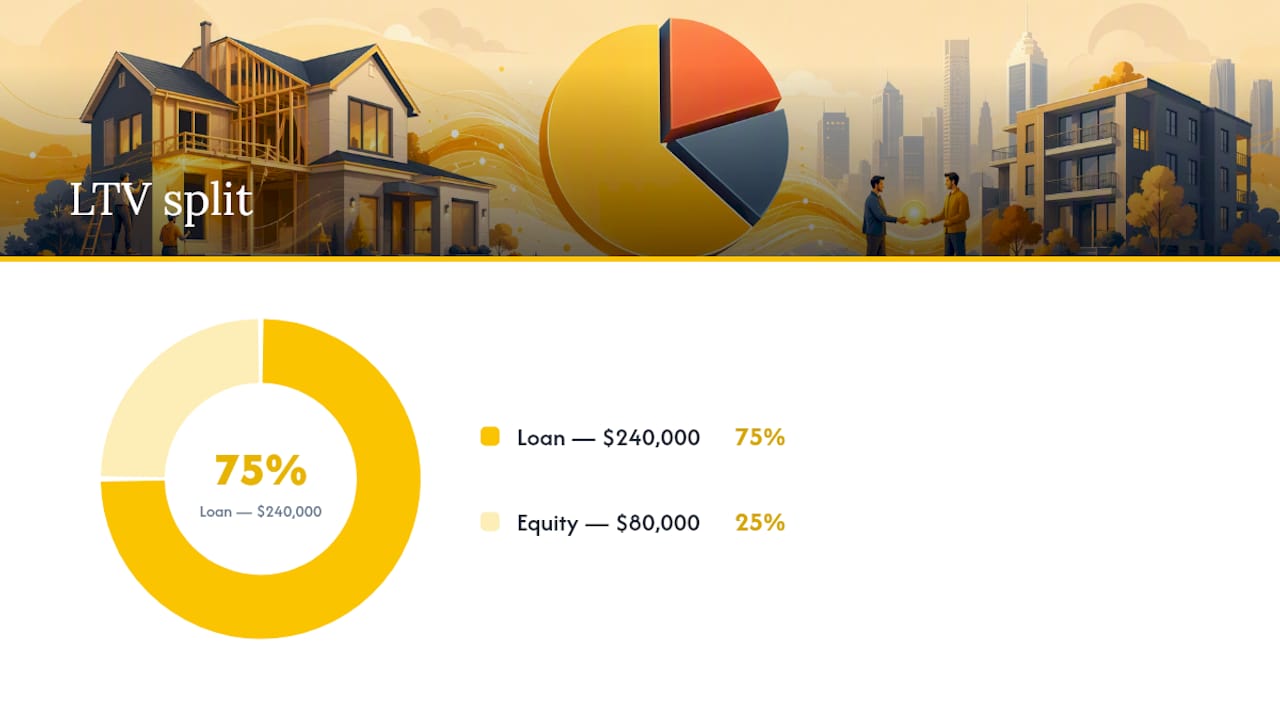
Cash-out proceeds = new loan amount − payoff balance − closing costs. Using the $240,000 example above, if your original hard money loan payoff is $200,000 and closing costs run $8,000, your net proceeds are $32,000.
DSCR = qualifying rent ÷ monthly PITIA. Covered in detail above, but worth restating as the third leg of the stool when you're deciding between cash-out and a rental conversion.
Statistic to model against: Hard money rates for acquisition and rehab loans have historically run in the 8% to 15% range, according to Experian's guide on financing a house flip, which is exactly why refinancing into a conventional, portfolio, or DSCR product afterward often cuts your carrying cost substantially.
Stress-test the model before committing. The Fix and Flip Loan Extensions guide covers what happens if your original loan matures before the refinance closes, which is worth reading if your timeline is tight.
Tax treatment matters here too. Interest and other carrying costs are often deductible as business expenses when the property operates within a trade or business, per IRS Publication 535, though how that applies to your specific situation depends on how you're holding and reporting the property.
What kills a refinance file and how to fix it early
Most refinance denials trace back to one of five preventable issues. Catching them before you apply saves the appraisal fee and the credit pull.
- Open permits. Lenders and appraisers both treat unresolved permits as a red flag; close every permit before ordering the appraisal.
- Overstated ARV expectations. If your target loan amount assumes comps that don't hold up, get a preliminary comparative market analysis from an agent before paying for a full appraisal.
- Missing contractor payment records. Lenders increasingly want proof that rehab funds were actually spent on the work claimed, so keep invoices and signed lien waivers organized as you go.
- Title issues. Unresolved liens or a chain-of-title problem from the original purchase can delay closing by weeks; run a title search early.
- Thin reserves. Underwriters want to see cushion beyond the closing costs, particularly on DSCR files where two to six months of payments is a common ask.
Avoid structuring a refinance that only works if the property stays 100% occupied with zero maintenance. That's not underwriting, that's hoping.
How to choose the right refinance path: a decision framework
Work through four questions in order, and the right product usually becomes obvious.
- What do you actually want? Cash in hand, a lower payment, or a long-term rental?
- Does the ARV and rent support that goal? Run the LTV and DSCR math from the formulas above before you apply.
- What seasoning do you have on title? This narrows your lender pool immediately.
- What reserves can you show? Higher reserves generally open up more lender flexibility on rate and terms.
Prioritize these criteria when comparing offers: ARV margin, DSCR at your target loan amount, seasoning requirements, fees and prepayment penalty schedules, and entity vesting rules if you're closing in an LLC.
Ask prospective lenders these questions directly:
- "What seasoning period do you require, and do you use the appraised value or purchase price before that period ends?"
- "What's your minimum DSCR, and do you offer an interest-only option to improve it?"
- "What's your prepayment penalty schedule, if any?"
- "What reserve requirements apply to this loan amount?"
How Jaken Finance Group supports flip refinance strategies
Jaken Finance Group specializes in hard money and fix-and-flip lending for real estate investors nationwide, built around asset-based underwriting rather than credit score thresholds. That structure carries through into refinance conversations: the property's value and income potential drive the decision, not a borrower's FICO history.
Some lenders emphasize closings in as few as five days, which matters when a flip's original loan is approaching maturity and a refinance needs to move fast. Investors researching how loan officers evaluate fix-and-flip financing will find detailed guidance on how underwriters weigh property condition, appraisal timing, and exit strategy, the same factors that determine whether a refinance file clears smoothly or stalls.
A practical lender's view on refinance versus sell
Refinancing to rent makes sense when the DSCR math clears comfortably and you'd rather build a portfolio than chase the next deal. Selling makes sense when your capital is better spent recycling into acquisition, especially early in a portfolio when volume matters more than a single asset's cash flow. Don't let a marginal DSCR talk you into holding a property that only pencils out on paper.
— Jason Taken
Ready to refinance your completed flip?
Some lenders approach refinancing like acquisition financing: property value and payoff math drive the decision, not a rigid credit box. Whether you're pulling cash out, lowering your rate, or converting into a DSCR rental, the underwriting looks at the appraisal, the rent, and the numbers you've already run, not just a credit report.
Before reaching out, have your final appraisal, contractor invoices and lien waivers, closed permits, and a lease or rent comp ready if you're pursuing a DSCR exit. Reserves matter too, so know your cash position going in. If you want to understand how the underwriting actually treats ARV versus purchase price, the asset-based loan explainer walks through the logic lenders use before you ever submit a file. From there, reach out to discuss your specific flip and get a real answer on which refinance path fits, not a generic rate quote.
This article is general information, not a substitute for advice from a qualified financial advisor. Consult a qualified financial professional about your own circumstances before acting on anything here.
Sources
- Federal Reserve — Mortgage Debt Outstanding (G.19)
- HUD — 203(k) Rehabilitation Mortgage
- IRS — Publication 535, Business Expenses
- NerdWallet — Fix and flip loans: What they are and best options
- LendFriend Mortgage — How to refinance a finished flip into a 30-year DSCR loan