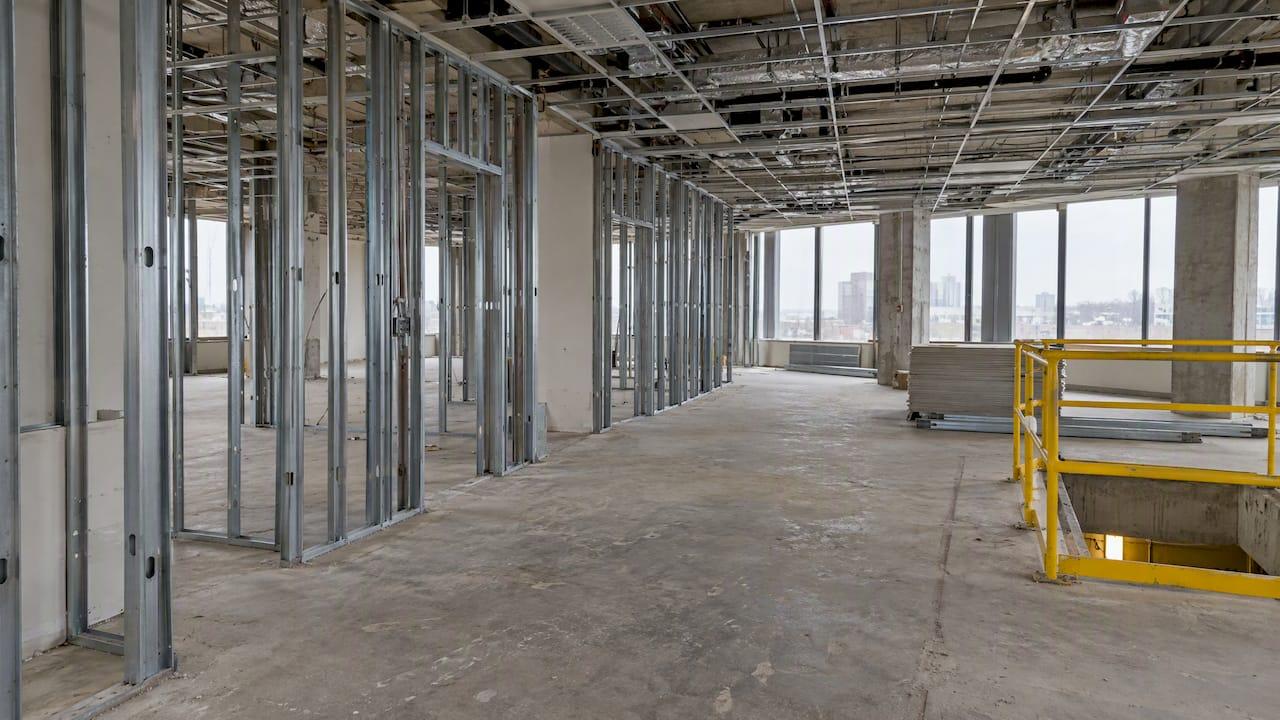
Adaptive reuse financing funds the conversion of an existing building, such as an office, retail center, hotel or industrial property, to a new use while keeping the structure. Most investors combine short-term asset-based debt for acquisition and conversion with a permanent refinance after lease-up, and add public programs or tax incentives where the project qualifies. Conventional banks often hesitate on vacant or transitional assets, so the first loan usually comes from a bridge or private lender.
TL;DR
- Adaptive reuse is underwritten as a development pro forma, not as a standard renovation. Lenders weigh conversion, entitlement, construction, lease-up and exit risk.
- Typical capital stack: a bridge or construction-style loan for acquisition and conversion, then a permanent refinance once the property stabilizes.
- Public tools can reduce cost of capital: HUD Section 108, historic and energy tax credits, LIHTC and tax-exempt bonds, TIF and local abatements. Each has its own eligibility rules.
- Check zoning, building and fire codes, environmental conditions and draw timing before you commit to a purchase price.
- Jaken Finance Group provides asset-based bridge and construction loans for investors, with no minimum credit score and closings in as few as 7 to 10 days.
Table of Contents
- What adaptive reuse financing covers
- How lenders underwrite a conversion
- Financing sources, from acquisition to permanent debt
- Rates, leverage and timelines
- Risks to check before you finance a conversion
- Testing the numbers before you apply
- Local context: Washington, DC and Chicago
- Financing your next conversion with Jaken
- FAQ
- Sources
What adaptive reuse financing covers
Adaptive reuse means changing a building's use without replacing the building. Common examples are office-to-residential, hotel-to-multifamily, retail-to-mixed-use and warehouse-to-flex or residential. The White House commercial-to-residential conversions guidebook catalogs the federal, state and local programs that apply to this type of project.
The financing differs from the two loan types it is most often confused with:
| Project type | What changes | Main underwriting focus |
|---|---|---|
| Renovation | Condition of the building, same use | Rehab budget, after-repair value (ARV), resale or rent |
| Ground-up construction | The building is replaced | Plans, permits, hard costs, completed value |
| Adaptive reuse | Use changes, structure stays | Entitlements, conversion scope, construction, lease-up, exit |
Because a conversion mixes the risks of both of the other types, lenders usually ask for a full budget, a realistic schedule and a defined exit before they discuss leverage.
How lenders underwrite a conversion
Underwriting for an adaptive reuse loan looks at four things: the property, the use, the budget and the sponsor.

The property and its former use. Multi-Housing News reports that lenders evaluate the building's former use, neighborhood economics, preservation plan and surrounding activity. The same article identifies debt funds, mortgage REITs and other non-bank balance-sheet lenders as flexible capital sources for complex projects.
The intended use. Lenders need to see that the new use is legally possible. That means zoning, permits, code compliance and, for some programs, a defined public benefit.
The budget. A lender expects acquisition, hard costs, soft costs, financing and carrying costs and a contingency, with a monthly cost-to-complete schedule. Interest reserves and the timing of equity versus loan draws matter as much as the total.
The sponsor. Experience with comparable conversions, liquidity, and the track record of the contractor and architect all affect terms. Asset-based lenders place more weight on the property and the business plan than on personal credit scores.
What a public program asks for
Public programs document more than private lenders do. HUD's Section 108 mixed-use financing guide says applications typically include:
- a project description and the public benefit it delivers
- proof of site control
- a project budget and operating pro forma
- lender and equity commitments
- personal financial statements and ownership documents
- an appraisal or market study
- environmental assessments
- the owner's project history
Underwriting then examines costs, operating projections, returns, breakeven, debt coverage and collateral. Even if you never use a public program, assembling this package before you approach any lender shortens the process.
Financing sources, from acquisition to permanent debt
Bridge loans for acquisition and early conversion
A bridge loan is the usual first position in a conversion. It lets an investor acquire a building that does not yet produce income, start work, and refinance when the project can support permanent debt. Asset-based bridge lenders underwrite the property's value and the plan rather than current cash flow, which is why they fit vacant or underused buildings.
Jaken Finance Group offers bridge loans at published rates of 8.99% to 13.5%. Our pages on bridge loans for real estate investors and office building bridge loans covering purchase, tenant improvements and conversion describe how those structures work for commercial assets. For projects that combine ground-floor retail with new residential units, see our mixed-use property bridge loans.
Construction financing for heavier scopes
When a conversion involves substantial structural work, new floor area or a full gut, a construction-style facility with staged draws may fit better. Our comparison of a construction loan versus a bridge loan sets out how scope, draw structure and timeline decide which is the better tool. Our new construction loans for investors and multifamily construction loans for 5 to 20 units cover the build-out side, at published rates of 8.99% to 13.5% for new construction.
Rehab-focused commercial debt
Lighter conversions, such as retail-to-office or older office-to-mixed-use with limited structural work, behave like value-add commercial rehabs. Our guide to commercial rehab bridge loans for value-add CRE explains how rehab budgets are sized and drawn.
Permanent financing after lease-up
The exit loan should be sized on its own, using supportable cash flow from the completed property rather than the projected rent roll on day one. For rental conversions, a debt service coverage ratio (DSCR) loan is a common exit. Jaken's DSCR rental loans are published at 5.75% to 10.5%, and our DSCR calculator shows how coverage changes with rent, taxes, insurance and rate. For investors planning a sale to an SBA-eligible owner-user, the strategy in bridge now, SBA later describes a different exit path.
Public and quasi-public capital
HUD Section 108. HUD states that eligible communities may borrow up to five times their CDBG allocation through Section 108, including for adaptive reuse of unused office and commercial space into housing. The financing is arranged through the local government, not directly by the developer. Per HUD's mixed-use guide, loans generally range from $100,000 to millions, maturities can reach 20 years, rates are set locally, and HUD charged a 2% upfront guarantee fee on applications approved in fiscal year 2020. The project must benefit low- and moderate-income persons, prevent or eliminate slums or blight, or meet an urgent need. The community stays responsible for repayment, so expect the local government to underwrite you closely.
Affordable housing credit enhancement. Freddie Mac's bond credit enhancement with 4% LIHTC supports affordable multifamily acquisition, rehabilitation, new construction and refinancing, and eligible transactions may include mixed-use properties. The program may underwrite qualifying deals to a minimum 1.15x debt coverage ratio and can provide interest-only financing during rehabilitation and stabilization.
Tax incentives. The federal guidebook lists historic and rehabilitation tax credits, LIHTC, tax-exempt bonds, tax increment financing, local abatements, grants and Inflation Reduction Act energy incentives among the tools a conversion may use. The U.S. Treasury explains that the IRA expanded building incentives for substantially reconstructed or rehabilitated multifamily buildings, including Sections 45L, 179D, 48 and 48(e). Under Section 45L, credits run from $500 to $5,000 per dwelling unit depending on efficiency standards and prevailing-wage compliance, and Treasury's example shows up to $500,000 for a 100-unit project at $5,000 per unit. Incentives change with legislation, so confirm current rules with a tax advisor before you underwrite them into the budget.

Rates, leverage and timelines
Terms vary by lender, asset and sponsor. For private asset-based debt, the useful numbers are these:
| Item | Jaken Finance Group (published or stated) |
|---|---|
| Bridge loans | 8.99% to 13.5% |
| New construction loans | 8.99% to 13.5% |
| Commercial property loans | 8.99% to 13.5% |
| DSCR rental loans (exit) | 5.75% to 10.5% |
| Minimum credit score | None |
| Leverage | Up to 100% of cost (LTC), subject to the deal |
| Closing speed | As few as 7 to 10 days |
| Payments | Deferred payment options available |
Maximum leverage, payment structure and rate depend on the asset, the scope and the borrower, so treat these as the range of what is offered and not as a quote. Public programs move on a different clock. Section 108 terms are negotiated locally, and tax credit structures involve allocation and syndication steps measured in months. Many investors close on a bridge loan first, then bring in public or permanent capital as it becomes available.
Risks to check before you finance a conversion
The NAHB's adaptive reuse guide points to the checks that decide whether a conversion is feasible. Run them before you go hard on a contract:
- Zoning and entitlements. Does the project need a zoning change or special permit? How long does that process take in the jurisdiction, and is the lender willing to fund through it?
- Building, fire and life-safety codes. Zoning, building and fire codes can affect mixed uses, floorplate depth, window access, unit sizes and open space. Deep floorplates in older office buildings are a common obstacle to residential layouts.
- Infrastructure and environmental conditions. Utility capacity, affordability requirements and environmental findings can change feasibility. Order environmental assessments early, because lenders and public programs both ask for them.
- Hard and soft costs. Price the conversion with a contingency that reflects the age and unknowns of the building. Hidden conditions behind walls and above ceilings are where budgets slip.
- Vacancy, lease-up and market demand. Estimate absorption conservatively and test the plan against the neighborhood, not only against the building.
- Existing debt and values. If you are refinancing or assuming debt, compare the existing property value to the converted value and confirm the numbers still work with the lender's leverage limits.
- Capital timing. A budget can balance on paper and still fail if equity and loan draws arrive after the invoices. Build a monthly funding schedule showing when each source of capital is actually available.
That last point matters more than most investors expect. A lender with experience in first-mortgage conversion loans improves execution because many conversion risks are invisible before construction starts, a view Multi-Housing News attributes to lenders active in the sector.
Testing the numbers before you apply
Before you request term sheets, build a simple model with four outputs: total project cost, loan amount at your target leverage, stabilized net operating income and the permanent loan that income supports. If the permanent loan does not repay the bridge with a margin, the deal needs more equity, a lower basis or a longer hold. For a framework on evaluating investment property returns before you commit, a guide to evaluating an investment apartment's yield walks through the same return-versus-price logic at the unit level.
For smaller conversions that resemble a flip, such as a retail shell turned into a single-use rental or an older building rehabbed and sold, our fix and flip calculator estimates profit and loan-to-cost.
Local context: Washington, DC and Chicago
Office vacancy has pushed several large cities toward conversion policies. We cover how that affects smaller investors in our look at the DC office-to-residential wave. In Illinois, our commercial lending in Illinois and Chicago bridge loans pages describe local financing options. Local incentives, such as abatements and TIF, vary by city and change often, so confirm eligibility with the municipality before you rely on them.
Our perspective on adaptive reuse financing
Conversions fail on timing more often than on concept. A building can be priced correctly, designed well and still stall because the capital stack could not close before a contract deadline or fund the first draw. That is the problem asset-based lending is built to solve.
We underwrite the property and the plan. Credit score is not a gate, leverage can reach up to 100% of cost on qualifying deals, and closings can take as few as 7 to 10 days. For an investor buying a vacant office, hotel or retail building, that speed lets the purchase happen first, while entitlements, public programs and permanent debt are arranged in parallel.
Our advice is to treat the bridge loan as the first step of a defined exit. Know which permanent loan, sale or program refinances you, size it on conservative cash flow, and build the monthly draw schedule before closing. Investors who do this get better terms and fewer surprises.
Jason Taken
Financing your next conversion with Jaken
Jaken Finance Group lends to investors across the United States on asset-based terms: bridge, new construction, commercial property, DSCR rental, gap and second-position structures. For adaptive reuse, most investors start with a bridge or construction loan and plan the refinance from day one.

Need financing for your next conversion? Review our commercial real estate financing for investors, compare the full list of loan options, or start at jakenfinancegroup.com with the property, the scope and your intended exit.
FAQ
What is the difference between adaptive reuse and renovation?
Renovation improves a building for its existing use. Adaptive reuse changes the use, for example from office to apartments, which usually requires entitlements, code upgrades and a development-style budget. Lenders underwrite it accordingly, with attention to lease-up and the exit.
Can I get an adaptive reuse loan with no minimum credit score?
Asset-based lenders focus on the property's value, the scope of work and the exit plan rather than credit score. Jaken Finance Group sets no minimum credit score. You still need a documented budget, a credible plan and the equity the deal requires.
What is the typical term for adaptive reuse financing?
Short-term bridge and construction loans cover acquisition and conversion, then a permanent loan takes over after stabilization. Public programs run longer. HUD says Section 108 repayment terms are negotiated locally but cannot exceed 20 years.
Which tax credits can apply to an adaptive reuse project?
Depending on the building and the project, options include historic and rehabilitation credits, LIHTC for affordable housing and IRA energy incentives such as Section 45L. Each has its own eligibility rules, so confirm them with a tax advisor before including them in your budget.
How fast can an adaptive reuse bridge loan close?
Our closings can take as few as 7 to 10 days, depending on the asset, documents and title. Public financing and credit enhancement take considerably longer, which is why many investors close the acquisition on a bridge loan first.
Sources
- White House Commercial-to-Residential Conversions Guidebook (2023)
- Adaptive Reuse Financing Game Plans, Multi-Housing News
- Section 108 Mixed-Use Real Estate Financing Tool, HUD Exchange
- Section 108: Housing Opportunities Focus, HUD
- Bond Credit Enhancement with 4% LIHTC, Freddie Mac
- The Inflation Reduction Act: Benefits for Builders of Multifamily Housing, U.S. Treasury
- NAHB Adaptive Reuse Guide