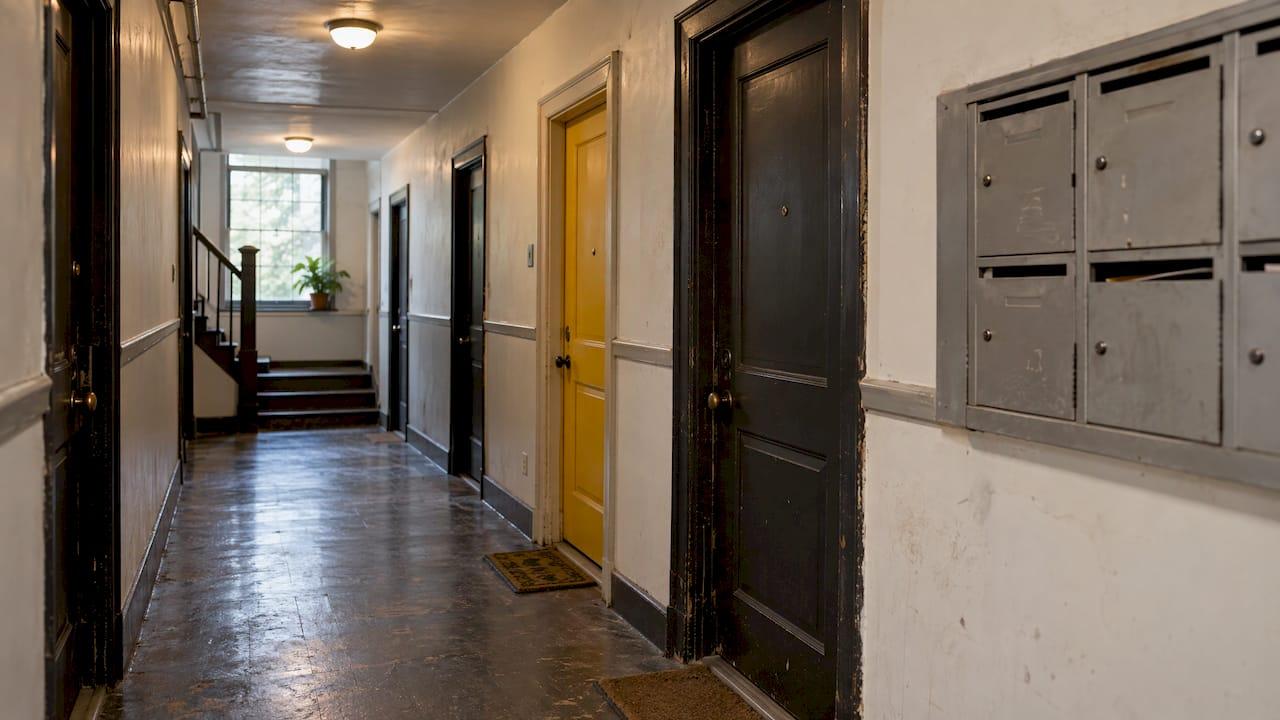
A tenant-occupied bridge loan is short-term, asset-based financing secured by a property that already has tenants in place. Investors use it to buy, reposition or refinance a leased asset before permanent financing or a sale. The lender underwrites the property's value and the business plan to stabilize it, not only the rent currently collected. This guide covers how lenders read leases, what documents to prepare, what happens to tenants, what the loan costs and how to plan the exit.
TL;DR
- A tenant-occupied bridge loan funds a leased property that is not yet stabilized, or that needs capital before long-term debt is available.
- Lenders typically underwrite a transition: in-place NOI from the T12 and rent roll, then a projection through stabilization, tested against LTC and as-is and stabilized LTV.
- Existing tenants can generally stay. Leases, estoppel certificates and SNDAs determine how a lender's lien affects their occupancy.
- Jaken Finance Group publishes bridge loan pricing of 8.99-13.5%, with no minimum credit score and closings in as few as 7–10 days.
- The exit (sale, refinance into a DSCR loan, or other takeout) should be set before the loan closes.
Table of Contents
- What a tenant-occupied bridge loan is
- How lenders underwrite tenants, leases and rent
- Documents to prepare
- Can tenants stay during closing and renovation?
- Loan terms and costs
- How fast can it close?
- Risks and how to plan the exit
- Choosing the right structure by property type
- Our perspective
- Financing your tenant-occupied acquisition with Jaken
- FAQ
- Sources
What a tenant-occupied bridge loan is
A bridge loan covers the period between an immediate funding need and a long-term loan or sale. When the collateral has tenants, the loan is usually written because the income is not yet where a permanent lender wants it. Common situations include:
- Buying a multifamily, mixed-use or small commercial building with below-market rents or elevated vacancy.
- Acquiring a leased property quickly, before a seller's deadline, then refinancing once the numbers are documented.
- Funding unit turns, common-area work or tenant improvements while leases roll over.
- Replacing a maturing loan on a leased asset that does not yet qualify for conventional or agency takeout.
Credit-rating methodology offers a useful picture of how the market classifies these deals. According to Transparency Analytics' bridge loan criteria, a transaction can be treated as a bridge loan when the business plan involves material renovation, repositioning or change of use, when the collateral is not stabilized (for example, occupancy below 80% or no executed leases on a majority of rentable space), or when the structure includes funded reserves for capex or interest carry. A tenant-occupied property fits whenever one of those conditions applies.
Tenant-occupied versus vacant collateral
A vacant property is underwritten almost entirely on value and the renovation budget. A tenant-occupied property adds a second layer: the leases themselves. Rents, lease terms, tenant quality and rollover dates all affect value and the lender's view of risk. That is useful to a borrower, since existing leases can support the as-is value and demonstrate that the stabilization plan is realistic.
How lenders underwrite tenants, leases and rent
Bridge lenders generally treat an occupied but unstabilized deal as a transition problem. Underridge's underwriting walkthrough explains that current NOI may be too low to carry the loan alone. The process starts with in-place NOI from the trailing 12 months (T12) and the rent roll, then builds a monthly projection through stabilization. The lender also reviews the renovation budget, leasing assumptions and timeline against the sponsor's track record.
Rent roll stress testing
Expect the lender to discount the rent roll rather than accept it at face value. Aloan's DSCR underwriting guide describes common practice: compare in-place rents to market rents and use the lower figure for each unit, apply physical vacancy of typically 5-10% even to stabilized properties, deduct a further 1-3% for tenants who do not pay, and account for concessions, free rent and lease-up costs. Under that approach, a building that is 98% occupied today may still be underwritten at 90-95% effective occupancy.

For a borrower, the practical lesson is to present clean numbers. Rents above market are likely to be underwritten down, so build your own pro forma on the same conservative basis before you apply.
As-is and as-stabilized value
On bridge loans, appraisals are typically ordered at two values: as-is and as-stabilized. Underridge notes that loan size is tested against several constraints, including loan-to-cost, as-is LTV, stabilized LTV and stabilized debt yield. The smallest result governs. A property with strong existing leases but a heavy rehab scope may be limited by LTC, while a stabilized-value test can cap a deal whose projected rents look aggressive.
Documents to prepare
Documentation is where most tenant-occupied files gain or lose time. A complete package usually includes:
| Document | What it shows the lender |
|---|---|
| Current rent roll | Unit-by-unit rent, lease start and end dates, deposits, arrears |
| Executed leases | Terms, renewal options, any purchase or termination rights |
| T12 operating statement | Actual income and expenses over the trailing year |
| Estoppel certificates | Each tenant's confirmation of lease terms and no landlord default |
| Purchase contract or payoff letter | Acquisition price or existing debt to retire |
| Scope of work and budget | Cost and sequence of renovation, with tenant disruption considered |
| Leasing and business plan | Target rents, timeline, how stabilization is reached |
| Sponsor experience and financials | Track record with similar assets |
| Exit plan | The refinance or sale that repays the loan |
If you plan to renovate while tenants remain in place, show a unit-by-unit schedule. Lenders want to see how many units are offline at any time and how that affects income during the loan term.
Can tenants stay during closing and renovation?
In most investor transactions, yes. Tenants continue paying rent, and the loan is recorded against the property. What matters is how the lender's lien relates to the leases, and that is a legal question to settle with a real estate attorney in the property's state.
SNDAs and estoppels
Tenant protections if a lender forecloses commonly rely on Subordination, Nondisturbance and Attornment Agreements. A continuing legal education course on the subject describes SNDAs as addressing the risk that foreclosure of a landlord's interest could terminate a tenant's lease. Poyner Spruill LLP explains that a tenant in compliance with its lease may have its right to continue occupying the premises preserved, and ties that protection to SNDAs and estoppel certificates.
For investors, this means:
- Gather estoppel certificates early. They confirm rent, deposits and defaults, and they feed directly into underwriting.
- Ask whether commercial tenants hold leases that are senior or junior to the new loan, and whether an SNDA is needed.
- Review any tenant options to purchase, rights of first refusal or early termination rights. These can affect the lender's collateral and your exit.
The same principle, that a lender's rights and an occupant's rights have to be reconciled on paper, appears in other forms of real estate finance. Readers who want to see it in a seller-financed context can review these contract for deed legalities in Oklahoma, which show why written terms matter when occupancy rights and a lender's interest overlap.
Landlord-tenant law
Residential tenants are also protected by state and local landlord-tenant rules on notice, deposits, entry for repairs and relocation. Plans that involve non-renewals, rent increases or temporary unit vacancies should be checked against the rules where the property sits. Chicago and Washington, DC, for example, have their own tenant ordinances that differ from state baselines, so confirm requirements with local counsel before you build a renovation schedule that depends on turning units.
Loan terms and costs
Pricing depends on the asset, leverage, leverage source and the strength of the plan. Jaken Finance Group publishes the following ranges for relevant programs:
| Program | Published rate |
|---|---|
| Bridge loans | 8.99-13.5% |
| Commercial property loans | 8.99-13.5% |
| Fix and flip loans | 8.99-13.5% |
| DSCR rental loans | 5.75-10.5% |
The DSCR range is relevant because it is the usual takeout once a tenant-occupied property is stabilized. The gap between the two ranges is the carrying cost of speed and flexibility, which is why the business plan should shorten the bridge period as much as possible.
Other items to model:
- Origination points and closing costs: quoted per loan; ask for a full fee schedule in writing.
- Interest structure: some bridge structures offer deferred payment options, which can ease cash flow while units are being renovated or leased.
- Reserves: interest or capex reserves may be funded at closing, as the classification criteria above describe.
- Leverage: our positioning is asset-based lending with no minimum credit score and leverage up to 100% LTC on qualifying deals.
Actual terms vary by property type, location, sponsor experience and scope, so treat any range as a starting point for a quote.
How fast can it close?
Speed is the main reason investors choose private bridge capital over conventional loans for occupied property. Jaken Finance Group closes loans in as few as 7–10 days. The factors that most often move a timeline are:
- Third-party reports. Appraisal, title and any environmental or property condition reports run on their own schedules.
- Tenant paperwork. Late estoppels, missing leases and an incomplete rent roll are the most common delays on occupied assets.
- Title and payoff issues. Existing liens, unrecorded leases or an unresponsive current lender can slow a refinance.
- Scope clarity. An unfinished budget forces the lender to wait on the as-stabilized value.
Ordering the rent roll, leases and estoppels at the same time as the contract or application keeps the file moving.
Risks and how to plan the exit
The central risk is dependency. Transparency Analytics states that bridge loans carry compounding dependency risk: renovation must be completed, lease-up achieved and a takeout executed, often within a compressed timeline. That framing shows where to build safeguards.
Build the exit before closing
- Refinance into long-term debt. For rental assets, model the DSCR loan you expect to qualify for at stabilization, using the lender's haircuts on rent and vacancy. Our DSCR calculator lets you test the coverage ratio, and our guide to how much you can borrow with a DSCR loan explains sizing.
- Sale. Use a conservative sale price and a realistic marketing period.
- Second exit. Identify a backup, such as an extension or a cash-out refinance, in case the first takeout is delayed.
Reduce execution risk
- Stage renovations so income is not interrupted in too many units at once.
- Keep a contingency in the budget and a liquidity reserve beyond it.
- Track lease expirations against the loan maturity date.
- Price the loan on stabilized numbers that include vacancy and credit loss, not on current occupancy alone.
Choosing the right structure by property type
The collateral type changes the documents and the exit. Jaken Finance Group has dedicated resources for several tenant-occupied categories:
- Small residential rentals: see our guide to DSCR loans on triplex and fourplex properties for the takeout side.
- Larger multifamily: 10+ unit multifamily DSCR loans cover commercial-scale rental assets.
- Retail and residential combined: mixed-use property bridge loans address assets with more than one income type.
- Retail centers with vacancy: our article on strip-center bridge loans and tenant work walks through lease-up costs.
- Office: office building bridge loans cover purchase, tenant improvements and conversion.
- Industrial: bridge loans for value-add industrial buildings cover repositioning of leased space.
- Value-add commercial: commercial rehab bridge loans detail how renovation budgets are funded.
Our perspective
Occupied property is not a weaker form of collateral. It is collateral with evidence: rents that are collected, leases that can be reviewed and a history that can be underwritten. The problem is timing. Permanent lenders want stabilized numbers, and sellers and opportunities rarely wait for them.
That is the gap an asset-based bridge loan is designed to fill. We lend on the property's value and the plan to stabilize it, which is why we offer no minimum credit score, leverage up to 100% LTC on qualifying deals, deferred payment options and closings in as few as 7–10 days, nationwide.
Our advice to investors is consistent. Document the rent roll and leases early, size the project on conservative vacancy and credit loss, and name the takeout before closing. Borrowers who do this tend to move faster and to be better positioned when the bridge period ends.
Jason Taken
Financing your tenant-occupied acquisition with Jaken
Jaken Finance Group provides bridge, commercial property, DSCR rental, cash-out refinance and portfolio refinance loans for investors nationwide. For an occupied asset, we can structure a bridge to acquisition or repositioning, with a DSCR or other takeout planned for stabilization.

Review bridge loans for real estate investors or our full list of loan options, then send the property details, rent roll and your exit plan for a quote.
FAQ
Can I get a bridge loan on a property with tenants?
Yes. Bridge lenders regularly finance leased residential and commercial property. The lender will review the rent roll, leases and operating history, and underwrite both current income and the plan to reach stabilization.
Do tenants have to move out for the loan to close?
No, not generally. Tenants in compliance with their leases can typically remain, and SNDAs and estoppel certificates document how their rights relate to the new lien. Confirm the specifics with a real estate attorney in the property's state.
Does a low-occupancy building qualify?
Often, yes. Properties below stabilized occupancy are the typical use case for bridge financing, provided the business plan, budget and exit are credible. Underwriting then focuses on as-stabilized value and the sponsor's track record.
What is the usual exit for a tenant-occupied bridge loan?
The most common exits are a refinance into long-term debt, such as a DSCR loan on a rental, or a sale. Plan the takeout using conservative rent and vacancy assumptions, and keep a backup exit in case timing slips.
Sources
- Transparency Analytics, Single-Asset Single-Borrower rating methodology addendum
- Underridge, How to Underwrite a CRE Bridge Loan
- Aloan, How to Calculate DSCR for a CRE Loan
- Poyner Spruill LLP, The Importance of SNDAs and Estoppel Certificates
- LandFix, Contract for Deed Legalities in Oklahoma