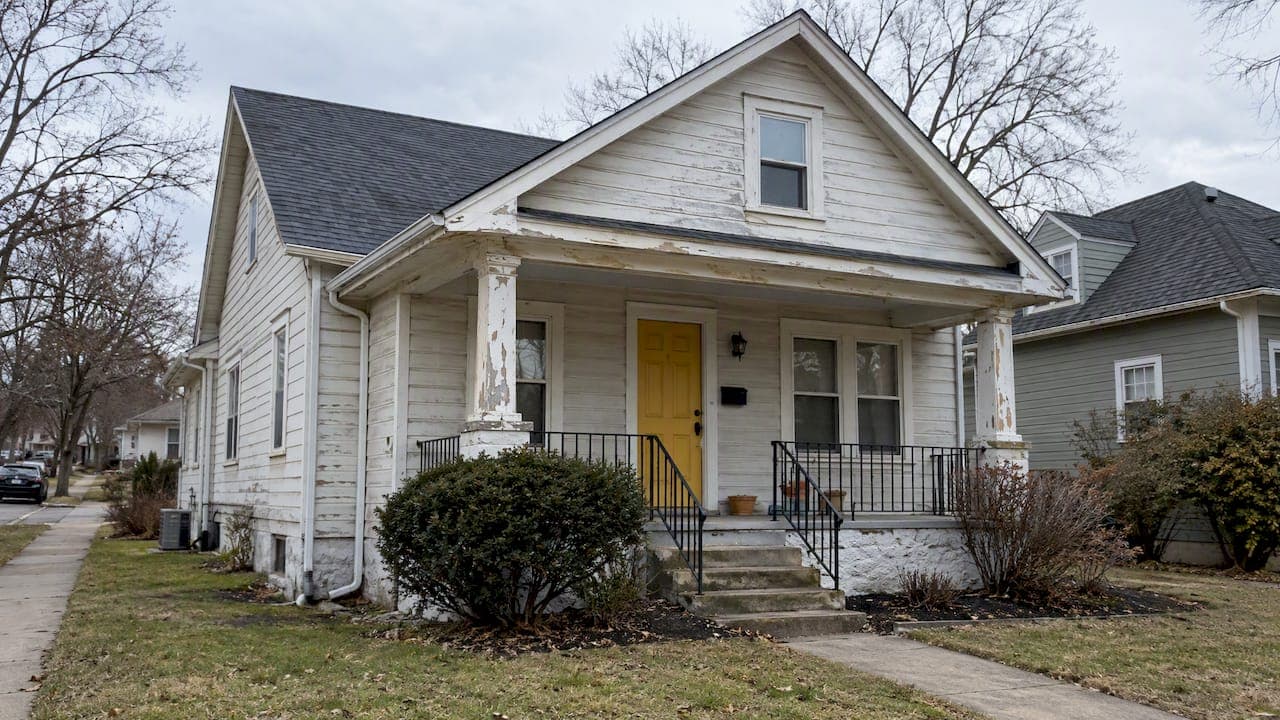
Short sale financing is the loan or cash a buyer uses to purchase a property that the owner is selling for less than the mortgage balance, with the owner's lender approving the price. Owner-occupant buyers can use conventional, FHA, VA or USDA loans if the property and the borrower qualify. Investors who need speed, or whose deal does not fit agency guidelines, often use cash or asset-based loans such as hard money and bridge loans. The financing is the easy part to arrange. The hard part is the seller's lender, which controls the timeline.
TL;DR
- A short sale needs two approvals: your lender approves you, and the seller's lender approves the sale price. Neither one speeds up the other.
- Owner-occupants can use conventional, FHA, VA or USDA financing, subject to each program's property and borrower rules. Investors typically use cash, hard money, bridge or DSCR loans.
- Short sales are usually sold as-is, so the appraisal, inspection and renovation budget decide whether a deal works.
- Extra costs, unresolved liens and long approval windows are the main risks. Build them into the offer and the loan term.
Table of Contents
- What a short sale means for the buyer
- Short sale vs. foreclosure purchase
- Financing options for a short sale purchase
- Why investors use asset-based loans for short sales
- How the approval process works
- Costs and risks to price into the offer
- A worked example
- Perspective
- Financing your next short sale with Jaken
- FAQ
- Sources
What a short sale means for the buyer
The Consumer Financial Protection Bureau describes a short sale as a sale of a home for less than the owner owes on the mortgage, made with the lender or servicer's agreement. For a buyer, that agreement is the whole transaction. You can sign a contract with the owner, but the price is not final until the lender or servicer accepts it, and the lender can decline.
That shifts how you think about financing. In a standard purchase, your lender and the seller are the only parties to coordinate. In a short sale, you may also be dealing with the seller's servicer, any second-lien holders, and in some cases mortgage insurers. Each can ask for documents or a different number. Your financing must stay valid through all of that.
The North Carolina Real Estate Commission puts the consequence plainly: because the seller's lender keeps control and can reject the deal, closing a short sale is more uncertain than a traditional sale. The same bulletin notes that in some cases the seller may still owe the lender the balance, which is a reason the lender's approval terms should be read in writing.

Short sale vs. foreclosure purchase
The two are often grouped together, but they are different transactions with different financing implications.
| Factor | Short sale | Foreclosure (auction or REO) |
|---|---|---|
| Who sells | The current owner, with lender approval | The lender, after foreclosure, or the auction process |
| Timing of financing | Financing is arranged before the lender approves the price | Auction purchases often require funds within a short window |
| Price control | Lender must accept the offer | Set by the auction or the lender's listing |
| Access for inspection | Usually possible through the owner, but condition is as-is | Often limited or none at auctions |
| Typical financing | Cash, agency loans for owner-occupants, hard money or bridge loans | Cash or short-term private loans at auctions; broader options on REO listings |
If you are comparing foreclosure auctions, the payment window is the key constraint. Our sheriff sale payment deadline funding checklist covers how to line up funds before bidding.
Financing options for a short sale purchase
There is no special "short sale loan." Buyers use the same loan products as any other purchase, and the short sale conditions only change how smoothly each one works.
Conventional loans
Fannie Mae defines a purchase transaction as one where loan proceeds finance the acquisition of the property, or acquisition and rehabilitation. The borrower must still meet the minimum contribution requirements of the loan type selected. A conventional loan works if the property appraises, meets condition standards and the borrower qualifies on credit and income. A distressed, deferred-maintenance house often fails on condition, which is why many short sale buyers run into trouble with conventional underwriting.
FHA loans
FHA financing can be used for a short sale property when the buyer qualifies and the property meets FHA's minimum property standards. Since many short sale homes are sold as-is with deferred repairs, the appraisal is the point where deals tend to stall. Investors should note that FHA is an owner-occupant program. It is not an option for a purchase you plan to flip or rent out. For flippers following FHA policy changes, see our note on FHA eliminating the 90-day flip rule, which affects resale to FHA buyers rather than your own acquisition loan.
VA loans
The Department of Veterans Affairs states that a borrower may obtain a VA-guaranteed purchase loan if they qualify for a Certificate of Eligibility, meet VA and lender standards, and will occupy the home. A VA appraisal is required for purchase loans. The same guide cautions that a VA appraisal is not a home inspection, so as-is short sale properties still need an independent inspection.
USDA loans
USDA's Section 502 Guaranteed program allows funds to be used to purchase a dwelling in an eligible rural area as a primary residence. Eligible applicants may receive 100% financing, and funds may cover customary purchase costs and repairs associated with buying an existing dwelling. It is limited to eligible rural areas and owner-occupants.
Cash
Cash buyers are favored by many sellers' lenders because they remove financing and appraisal risk. A cash offer does not bypass the process, though. The lender still must approve the price, and cash buyers still wait. For an investor, "cash" can also mean a hard money or bridge loan that behaves like cash at closing, discussed below.
Portfolio and non-QM loans
Some lenders keep loans on their own books or write non-qualified mortgage products for borrowers who do not fit agency boxes. Terms are lender-specific and may involve higher rates or larger down payments. These are alternatives to agency loans, not a universal program.
Why investors use asset-based loans for short sales
For investors, the agency programs above mostly do not apply. They require owner occupancy, a property that meets condition standards, and a full income and credit review. Asset-based lending underwrites the property and the plan: the purchase price, the scope of work, the after-repair value (ARV), and the exit.
That matters on short sales for three reasons.
- Condition. A property with deferred maintenance can be financed on purchase price and rehab budget instead of needing to appraise as move-in ready.
- Credit profile. Owners of distressed property are sometimes buyers with their own credit history to repair. Our loans carry no minimum credit score, and underwriting looks at the asset.
- Closing speed once the lender approves. When the seller's lender finally issues its approval letter, the approval can come with an expiration. A financing source that can close in as few as 7 to 10 days lets you act within that window.
The last point deserves a caution. A fast lender does not make the short sale fast. The approval timeline belongs to the seller's servicer. What speed gives you is the ability to close when approval lands, instead of asking for extensions or losing the deal.
Which Jaken loan fits which short sale
| Your plan | Loan type | Published rate range |
|---|---|---|
| Buy, renovate and resell | Fix and Flip Loan | 8.99-13.5% |
| Buy and hold while approval or permanent financing is arranged | Bridge Loan | 8.99-13.5% |
| Buy, then demolish or build | New Construction Loan | 8.99-13.5% |
| Buy and rent to tenants | DSCR Rental Loan | 5.75-10.5% |
| Buy a commercial asset | Commercial Property Loan | 8.99-13.5% |
The ranges are the rates published on our site. Your rate within a range depends on the deal, so confirm terms on the loan options page. For leverage, we offer up to 100% of cost on qualifying fix-and-flip deals, subject to underwriting. The fix and flip loan requirements list what we review.
How the approval process works
Understanding the servicer's clock helps you set a financing timeline that does not expire mid-negotiation.
Fannie Mae's servicing guide sets the standard for loans it owns. Under it, the servicer must acknowledge an initial offer within five business days and respond within 30 calendar days after receiving a complete borrower response package and an initial offer. The same guide requires the property to be actively listed on an MLS for at least five consecutive calendar days, including a Saturday and Sunday, before the servicer submits its recommendation. Other investors and servicers have their own rules, so ask the listing agent which entity owns the loan.
A typical sequence looks like this:
- Listing and offer. The owner lists the property, usually at a price the lender has indicated it may accept.
- Offer submission. Your offer goes to the seller's servicer with proof of funds or a preapproval. Buyers should be preapproved and present that financing to the seller and lender to demonstrate capability.
- Servicer review. The servicer orders its own valuation and reviews the seller's hardship package. This is where most of the waiting occurs.
- Counteroffer or approval. The lender approves, counters or rejects. An approval letter states the net proceeds it will accept and conditions, such as who pays certain fees.
- Your underwriting and closing. Appraisal, title work and the final loan documents proceed against the approved terms.
Short sales commonly run for months, longer than a standard purchase, because several parties each need to sign off: the seller, the seller's lender, your lender and other lienholders. Plan for that when you choose a loan structure. If your financing quote expires in a few weeks, ask whether it can be refreshed without a new application. Our hard money loan application walkthrough shows which documents to have ready, and the hard money closing timeline explains what controls our side of the schedule.
Costs and risks to price into the offer
Short sale discounts are not guaranteed. Lenders agree to a short sale to limit a loss, and the price reflects that, not a bargain for the buyer. Several risks matter specifically for financing.
Extra fees and documented payments
Fannie Mae's selling guide requires short-sale-related fees, subordinate-lien payments, and delinquent taxes or HOA assessments to be detailed in writing, agreed to by the buyer, seller and servicer, and included in the settlement statement. Ask your title agent for a draft settlement statement early. If an interested party reimburses a buyer's costs, those payments may be treated as sales concessions under agency rules, which can reduce what an agency lender will finance.
As-is condition
Distressed owners often could not keep up with maintenance, so problems may be hidden behind a clean listing. Commission your own inspection before you commit. Then size the rehab budget with a contingency, because a lender funding the rehab will draw against the scope you present.
Liens and title
Lien releases and the status of second mortgages should be resolved in the approval letter, not assumed. Order title early. If a lien appears late, your loan may be ready while your closing is not.
The deal falling through
Because the lender can reject or let an approval lapse, a short sale can fail after you have paid for appraisals and inspections. Keep refundable and non-refundable costs separate in your budget. If a lender withdraws during the process, our guides on what happens when a buyer's lender backs out and rescuing a deal after a hard money lender backs out cover the options.
Misstatements
Be accurate on every application and offer document. Knowingly making false statements to influence a federally connected lender, including FHA, is a federal crime, so do not shade income, occupancy or intended use.
A worked example
The numbers below are hypothetical and illustrate structure only, not an offer or a quote.
An investor negotiates a short sale at $200,000 on a house needing $50,000 in repairs, with an estimated ARV of $320,000. The same investor holds the deal under a fix-and-flip structure:
| Item | Amount |
|---|---|
| Purchase price | $200,000 |
| Rehab budget | $50,000 |
| Total project cost | $250,000 |
| ARV | $320,000 |
| Loan-to-cost at 85% (example) | $212,500 |
| Loan-to-ARV at that level | about 66% |
The investor funds the remaining $37,500 plus closing costs and carry. Leverage on cost is where lenders differ most, so compare loan-to-cost and loan-to-ARV together, not either one alone. Include interest, insurance and taxes for the holding period, which on a short sale may start later than planned if approval takes months.
Perspective
We see the same pattern on short sale deals. Investors spend their attention on the discount and not enough on the approval clock. The seller's lender sets the schedule, and a financing source that cannot move when the approval letter arrives costs the investor more than any rate difference.
Our approach is to underwrite the asset and the plan. We do not set a minimum credit score, we can finance up to 100% of cost on qualifying deals, and we close in as few as 7 to 10 days. Those features suit short sales because they let you hold your offer steady through a long negotiation and still close inside the lender's approval window. Ask any lender, including us, to show in writing when the loan terms expire and what happens if the short sale takes longer than expected.
— Jason Taken
Financing your next short sale with Jaken
If you are an investor buying distressed property, we provide fix and flip, bridge, new construction, DSCR rental and commercial loans nationwide. Rates start from the published ranges above, with underwriting based on the property and the plan.
Review the loan options and published rate ranges, or if you plan to hold the property for a few months before permanent financing, see our bridge loans for real estate investors. To compare structures side by side, use our investment property loan comparison.
FAQ
Can you use a hard money loan to buy a short sale?
Yes. A hard money loan is underwritten on the property and the project, so it can finance an as-is distressed home that might not meet agency condition standards. The seller's lender still has to approve the sale price, and your loan terms need to last through that approval. Confirm the quote's expiration with the lender before you submit an offer.
Why do short sales take so long?
The seller's lender must review the hardship package, order its own valuation and approve your offer, while other lienholders may also need to agree. Each party works on its own schedule. Servicing guidelines set response windows, such as the 30 calendar days in Fannie Mae's guide after a complete package and offer, but counteroffers restart the process.
Is a short sale better than a foreclosure for an investor?
Neither is better in every case. A short sale usually allows an inspection and negotiation but takes longer and may fail. Foreclosure purchases can be faster, but access and information are often limited and the financing window is tight. Choose based on your condition tolerance, timeline and available funds.
Can I use an FHA or VA loan to buy a short sale?
Yes, if you will live in the property, you qualify under the program and the home meets its property standards. VA purchase loans require a VA appraisal, which is not a home inspection. Investors buying to flip or rent generally cannot use these owner-occupant programs.
Does a cash offer guarantee the lender will approve a short sale?
No. Cash lowers financing and appraisal risk, which lenders value, but the seller's lender must still approve the price. Cash also does not remove title, lien or fee issues from the process.
Sources
- What is a short sale? | Consumer Financial Protection Bureau
- Fannie Mae Short Sale | Fannie Mae Servicing Guide
- Purchase Transactions | Fannie Mae Selling Guide
- Purchase Transactions, short-sale fee documentation | Fannie Mae Selling Guide
- VA Home Loan Guaranty Buyer's Guide
- Single Family Housing Guaranteed Loan Program | USDA Rural Development
- Getting Savvy About Short Sales | NC Real Estate Commission