
A second position loan is a junior lien secured by a property that already carries a primary mortgage, and it matters because position determines who gets paid first if the borrower defaults. The first-position lender collects its full balance from foreclosure proceeds before the second-position lender sees a dollar, which is exactly why second mortgages carry higher rates and tighter underwriting than a primary mortgage. That added risk to the lender translates directly into cost and complexity for the borrower.
Second-position loans show up in a handful of common forms:
- Home equity loan — a fixed-rate lump sum repaid on a set schedule
- HELOC — a revolving credit line with a variable rate
- Piggyback second mortgage — originated alongside the first loan to avoid mortgage insurance
- Investor second-lien products — including second-lien DSCR loans and hard-money second-position financing for rental or fix-and-flip properties
Key Takeaways
Second position loans carry higher rates and stricter underwriting because the junior lender recovers only what remains after the first mortgage is paid in full.
| Point | Details |
|---|---|
| Lien priority is recorded | The mortgage recorded first at the county gets paid first in foreclosure, regardless of loan size. |
| Product type shapes payment risk | Home equity loans offer fixed payments; HELOCs carry variable rates that can rise during repayment. |
| Subordination controls refinancing | A second lender must agree to subordinate, or the borrower must pay it off, before refinancing the first mortgage. |
| Underwriting leans on equity and cash flow | Lenders check CLTV, credit score, and DTI or DSCR before approving a junior lien. |
| Asset-based second-position lending exists for investors | Jaken Finance Group underwrites fix-and-flip and second-lien DSCR loans around property value and exit strategy, often closing within days. |
Table of Contents
- How Does a Second Position Loan Work?
- What Are the Common Types of Second Position Loans?
- How Does Subordination Affect Refinancing a First Mortgage?
- What Does a Second Position Loan Cost, and Who Qualifies?
- What Are the Risks and Red Flags of a Second Position Loan?
- How Jaken Finance Group Structures Second-Position Financing for Investors
- Sources
How Does a Second Position Loan Work?
Lien priority isn't a matter of opinion or negotiation after the fact. It's set by public record. When a mortgage is recorded with the county, that recording date establishes its place in line. The first mortgage recorded holds first position; anything recorded afterward, including a home equity loan or HELOC, sits in second position, subordinate to the first.
That order controls what happens if the property goes to foreclosure. Consider a home that sells at foreclosure auction, with unpaid property taxes and foreclosure costs deducted first.
- Remaining proceeds after these deductions
- First mortgage balance is paid in full
- Second-position lender receives only what remains toward their second lien
- The second lender may absorb a loss depending on the shortfall, and the borrower may still owe a deficiency depending on state law
That $30,000 shortfall is the entire economic argument for why second-position loans cost more. The CFPB confirms this hierarchy directly: the second lender is repaid only from what remains after the first lien is satisfied, and that structural exposure shapes every underwriting decision the second lender makes, from loan-to-value caps to reserve requirements.
What Are the Common Types of Second Position Loans?
Not every second lien looks the same, and the differences affect your monthly payment, your rate exposure, and how a lender evaluates your application.
- Home equity loan: You receive a lump sum upfront and repay it in fixed installments at a fixed rate, which makes budgeting predictable.
- HELOC: Structured as revolving credit with a draw period followed by a repayment period, typically on a variable rate that can rise well after closing.
- Piggyback loans: An 80/10/10 or 80/20 structure pairs a first mortgage with a simultaneous second lien, letting buyers avoid private mortgage insurance while financing a smaller down payment.
- Investor second-lien products: Second-lien DSCR loans and hard-money second-position financing underwrite to the property's cash flow or after-repair value rather than the borrower's personal credit history, which changes the qualification math entirely for active investors.
How Does Subordination Affect Refinancing a First Mortgage?
Refinancing gets complicated the moment a second lien is already recorded against your property, because the new first mortgage needs to reclaim first position. That's where subordination comes in: a subordination agreement is the second lender's formal, written consent to remain in second position behind the newly refinanced first mortgage, rather than automatically jumping ahead of it.
Borrowers facing this situation generally have three paths forward:
- Request subordination from the second lender, which keeps both loans in place with the original second lien simply stepping behind the new first mortgage.
- Pay off the second lien entirely at or before closing, clearing the way for a straightforward refinance.
- Refinance both loans together into a single new first-position mortgage, consolidating the debt and eliminating the second lien altogether.
If the second lender refuses subordination, the refinance can stall completely. The CFPB notes this is a common practical obstacle, and lenders don't always agree to subordinate, particularly when the new first mortgage would increase total leverage on the property. In commercial and investment deals, this friction is often resolved before it becomes a problem: an intercreditor agreement negotiated at origination defines each lender's rights and remedies in advance, which speeds up any future refinance and reduces the second lender's legal exposure.
Pro Tip: Ask about subordination terms before you close on a second lien, not after. A second mortgage that includes automatic subordination language for future refinances saves you a renegotiation headache years down the road.
What Does a Second Position Loan Cost, and Who Qualifies?
Interest rates on second position loans run higher than first mortgages because the lender's recovery risk is greater, a gap that Chase's borrower guidance confirms is standard across the industry. That premium reflects the foreclosure waterfall covered earlier: junior lenders price in the possibility of a partial or zero recovery.
Underwriting for second liens typically looks at:
- Combined loan-to-value (CLTV), usually capped between 80% and 90% depending on the lender
- Credit score, generally higher than first-mortgage minimums given the added risk
- Debt-to-income ratio for owner-occupied borrowers, or DSCR (debt service coverage ratio) for investment property loans
- Closing costs and appraisal fees, which apply to second liens much as they do to first mortgages
The Mortgage Bankers Association reports rising home equity originations and outstanding balances in 2024, a signal that lenders remain actively competing for this business despite the added risk profile. Tax treatment also deserves attention: interest deductibility on a second mortgage depends on how the funds are used, so confirm your situation with a tax professional before assuming a deduction applies.
What Are the Risks and Red Flags of a Second Position Loan?

The core risk is straightforward: stacking a second lien on top of a first mortgage increases your total monthly obligation and puts your home at foreclosure risk if either payment goes unmet. A HELOC's variable rate can also rise mid-repayment, turning a manageable payment into a strained one.
Watch for these warning signs before signing:
- A lender who is vague or evasive about subordination terms for future refinancing
- Fee structures that aren't fully itemized in writing before closing
- No clear plan for how the loan gets paid off or refinanced at maturity
Before proceeding, confirm your actual equity position, model your payments under a higher-rate scenario, and compare the total cost against alternatives like a cash-out refinance or unsecured debt consolidation loan.
Pro Tip: Run the numbers assuming your HELOC rate rises two full points. If that payment breaks your budget, the loan is riskier than it looks on day one.
How Jaken Finance Group Structures Second-Position Financing for Investors
Jaken Finance Group underwrites second-position loans around the property, not the borrower's credit profile. For qualified investment scenarios, that means evaluating loan-to-value, after-repair value, and projected cash flow ahead of a FICO score.
Two structures come up most often with investor clients:
- Fix-and-flip bridge financing in second position, closing in as few as five days for time-sensitive acquisitions
- Second-lien DSCR loans for rental property owners who want to tap equity without disturbing a favorable first mortgage rate
Structuring a second lien around after-repair value and a defined exit plan, rather than a static credit score, gives investors leverage they can't always get from conventional second-mortgage products.
Investors weighing asset-based lending against a traditional home equity loan should look closely at how each approach treats subordination and exit timing.
What underwriting teaches you about second liens
Two mistakes come up again and again in second-lien underwriting: borrowers who overestimate their equity cushion after fees, and borrowers who never wrote down an actual exit plan for the second loan before closing. Know exactly how you'll pay off that second lien before you sign for it.
— Jason Taken
Get Started With Asset-Based Second-Position Financing
Jaken Finance Group is the alternative to a conventional bank when your second-position financing needs to close in days, not months, and when the underwriting should weigh your property's value and cash flow rather than a rigid credit score cutoff. Real estate investors pursuing fix-and-flip bridge loans, second-lien DSCR financing on a rental, or a piggyback structure on a new acquisition can work through a straightforward prequalification: property value, existing first-lien balance, and your intended exit strategy.
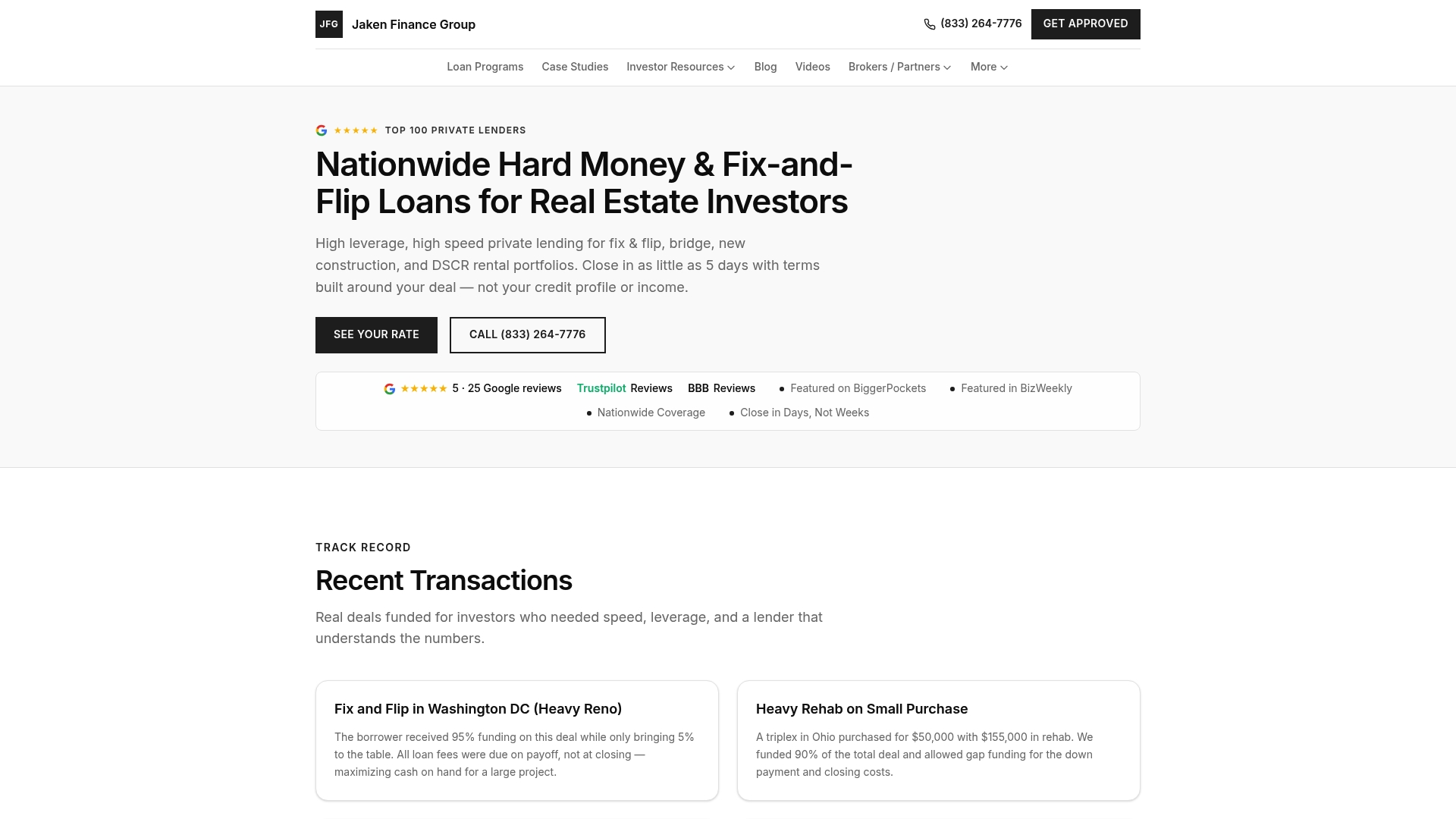
Because underwriting centers on the asset rather than a lengthy credit review, qualified borrowers can move from application to closing in as few as five business days. If you want the mechanics explained before you apply, start with this breakdown of asset-based lending, then reach out to discuss asset-based hard money options for your next second-position deal.
Sources
- What is a second mortgage loan or "junior-lien"? | Consumer Financial Protection Bureau
- Second mortgage: What It Is, How It Works, Lender Requirements | Investopedia
- SEC filing (intercreditor/subordination provisions)
- Second mortgages explained | Chase