
Yes. Owners of residential rental units in Indianapolis and Marion County must register with the Department of Business and Neighborhood Services, with exemptions for Beech Grove, Lawrence, Southport, and Speedway. Short-term rental owners face a separate obligation: an annual permit per unit, a one-time $150 initial fee, and no renewal charge after that. Both processes run through the Accela Citizen Access portal, and BNS enforces both.
TL;DR:
- Residential rental owners in Indianapolis and Marion County must register annually through the Accela portal, except in Beech Grove, Lawrence, Southport, and Speedway.
- Short-term rental owners need a separate annual permit with a $150 initial fee, valid for one year and subject to inspection and compliance requirements.
- Registration and permits expire after 12 months, requiring owners to renew on time to avoid violations, fines, or permit revocation.
- Proper documentation, timely renewal, and accurate owner and unit information are essential for hassle-free compliance and fast deal closing.
- Registration acts as a vital legal record that supports eviction, financing, and due diligence processes, making it a key risk management step for investors.
Table of Contents
- Who Has to Register a Rental Property in Indianapolis?
- How Do You Register a Rental Property in Indianapolis?
- What Are the Short-Term Rental Permit Requirements?
- When Do Registrations Expire and What Happens If You Miss One?
- Keeping Your Registration Lender-Ready
- Why Registration Belongs in Every Investor's Risk Playbook
- Financing While You Bring Properties Into Compliance
- Sources
- FAQ
Who Has to Register a Rental Property in Indianapolis?
Any owner of a residential rental unit located in the City of Indianapolis or unincorporated Marion County falls under the landlord registration requirement. This covers single-family rentals, duplexes, and multifamily buildings alike, whether the owner is an individual, a landlord with a small portfolio, or an LLC holding dozens of doors. Registration renews annually, and BNS uses the registry to identify who is accountable for a parcel when a code complaint comes in.
Four excluded municipalities sit outside this rule because they operate under their own local government structures within Marion County:
- Beech Grove
- Lawrence
- Southport
- Speedway
If your property sits in one of those cities, confirm with that city's own code enforcement office rather than assuming the Indianapolis registry applies. For everyone else, the governing rule lives in city code and applies regardless of whether you self-manage or hire a property manager. When in doubt about a specific parcel, checking the assessor's jurisdiction line before filing avoids a wasted application.
How Do You Register a Rental Property in Indianapolis?
Registration runs entirely through the Accela Citizen Access portal, and the process is straightforward if you have your paperwork ready before you start.
- Create an Accela account or log in if you already have one from a prior permit or inspection.
- Search for your property using the Marion County parcel number, not the street address alone, since parcel lookups return more accurate matches.
- Enter owner information, including the legal name on title, mailing address, and phone number.
- Add property manager contact details if a third party handles the unit, along with the total number of rental units at that parcel.
- Review the application for accuracy, then submit and pay the applicable registration fee online.
- Save the confirmation number and download the receipt for your records.
Applications get rejected or delayed most often because of mismatched owner names or incomplete unit counts, not because of the fee itself. If a parcel search comes back empty, double-check the number against your property tax bill before calling BNS.
Pro Tip: Screenshot or save a PDF of your confirmation page the moment you submit. Accela's email confirmations occasionally land in spam folders, and having proof of submission matters if a renewal deadline is in dispute.
If the portal throws an error or a parcel won't load, contact BNS directly rather than resubmitting repeatedly, which can create duplicate records under the same address.
What Are the Short-Term Rental Permit Requirements?
Short-term rentals, meaning units advertised for stays typically under 30 days, fall under a separate rulebook: Chapter 852 of the Indianapolis code. Since January 1, 2025, every STR unit needs its own annual permit, and the initial application carries a one-time $150 fee. Renewals do not carry that fee again, but the permit still requires yearly renewal to stay active.
Chapter 852 spells out what an application must include:
- Owner name and contact information, plus property manager details if the owner isn't the day-to-day contact.
- Advertised occupancy limits matching what's listed on booking platforms.
- Confirmation that the dwelling is a legally built structure meeting applicable building codes.
- Signature from an authorized owner or agent, which matters for entity-owned properties.
The code also allows inspections as part of the review, particularly when a complaint or a permit renewal raises a flag. Operating an STR without a valid permit, or letting one lapse while still accepting bookings, exposes the owner to fines and can result in permit revocation, which effectively shuts down the listing until the owner reapplies and passes review.
When Do Registrations Expire and What Happens If You Miss One?
Both the landlord registry and STR permits run on a 12-month cycle, and neither renews automatically. Mark your renewal date the day you first register, because BNS does not chase down every property owner with a reminder.
- Landlord registrations and STR permits are due annually, tied to the original registration date.
- Fees are paid directly through Accela at the time of application or renewal.
- Enforcement typically starts with a complaint, moves to an inspection, and can escalate to a citation or permit revocation if violations aren't corrected.
A registration in good standing under Chapter 852 also matters beyond code compliance. Unregistered or lapsed properties can complicate eviction filings and other court remedies, since some legal processes ask for proof of proper registration before proceeding. City registries exist primarily as an enforcement and tracking tool. They do not automatically trigger routine inspections, but they give BNS the contact information needed to act fast once a complaint lands.
Keeping Your Registration Lender-Ready
Lenders, title companies, and buyers increasingly ask for proof of registration during due diligence, especially on multifamily deals or portfolio refinances. Building a simple, repeatable checklist saves time when a deal is moving fast.
- Confirm the parcel number and legal owner name match exactly across the registration, the deed, and any loan documents.
- Keep a folder with proof of ownership, unit counts, and current contact information for both the owner and any property manager.
- Log inspection dates and repair records so you can produce them if a lender or buyer's attorney asks.
- Register or update your filing as soon as you close on a property, not after the first tenant moves in.
- Reconfirm Accela contact details every time you refinance, change property managers, or transfer title into a new entity.
For portfolio owners, tracking registration status alongside property tax obligations prevents small paperwork gaps from turning into closing delays.
Pro Tip: Treat registration as a closing-day task, not an afterthought. Investors who register during acquisition, rather than waiting until a tenant complaint forces the issue, rarely deal with retroactive fines or rushed inspections.
Why Registration Belongs in Every Investor's Risk Playbook
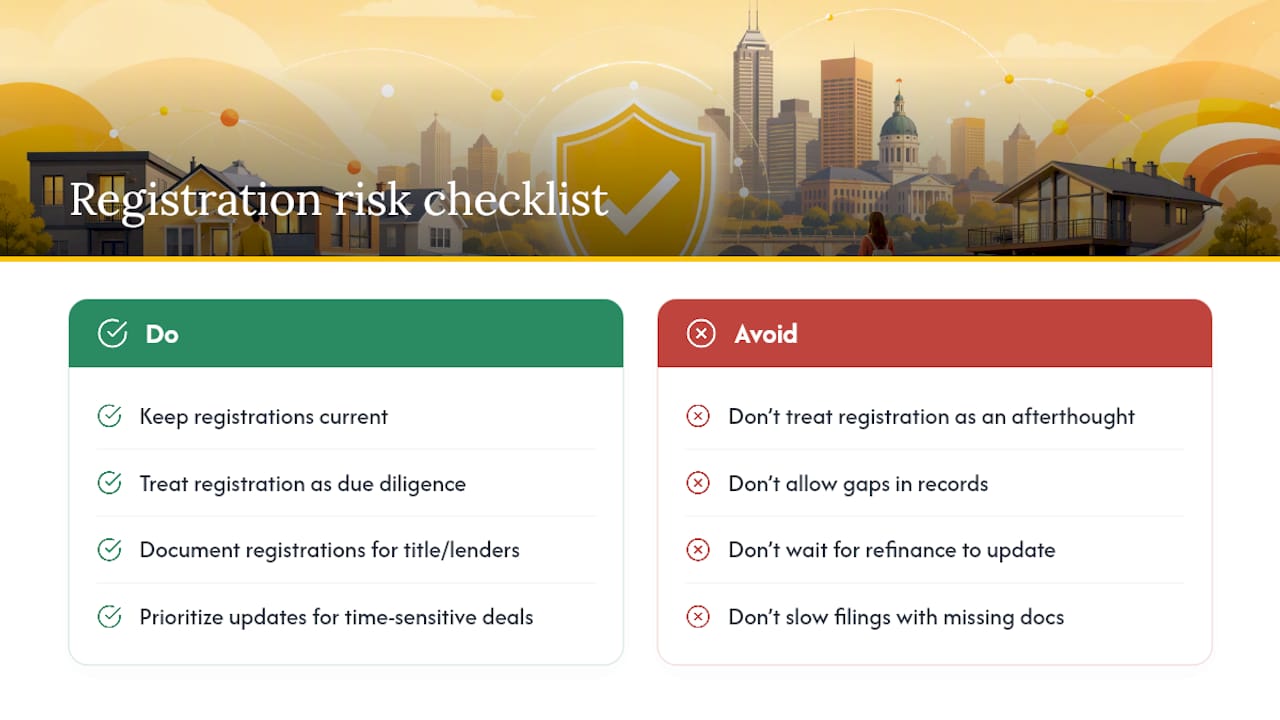
Compliance paperwork rarely feels urgent until it blocks a refinance or slows an eviction filing. Keeping registrations current isn't a bureaucratic afterthought. It's a documented, verifiable trail that title companies and lenders can check without asking you to explain a gap.
Investors who treat registration as part of standard due diligence close deals faster, because there's nothing to untangle at the title company. That discipline pays off most when a deal is time sensitive and every missing document adds another day to closing.
— Jason Taken
Financing While You Bring Properties Into Compliance
Registration deadlines and code repairs don't always line up with your cash flow, and that's where fast financing changes the equation. Jaken Finance Group underwrites against the property's value rather than your credit profile, which means an investor covering a code-related repair or racing a permit deadline can access capital without the delays of a conventional bank.

Fix-and-flip loans, DSCR rental loans, and bridge loans are all built for situations where speed matters more than a perfect credit score, with closings possible in as few as 7 to 10 days. If a rental unit needs building-code repairs before an STR inspection, or you're closing on a Marion County property and need the registration and financing to move in parallel, review Jaken Finance Group's real estate financing solutions and request a quote today.
This article is general information, not a substitute for advice from a qualified lawyer. Consult a qualified legal professional about your own circumstances before acting on anything here.
Sources
- Landlord and Short-Term Rental Registries — City of Indianapolis
- Chapter 852 - Indianapolis short-term rental permit program — Municode Library
FAQ
Do You Need a License to Be a Landlord in Indiana?
Indiana does not require a statewide landlord license, but Indianapolis and Marion County require rental unit registration with BNS, which functions similarly by putting your contact information on file for code enforcement. Properties in Beech Grove, Lawrence, Southport, and Speedway are exempt from the Indianapolis registry.
What Are the Landlord-Tenant Laws in Indiana?
Indiana landlord-tenant law covers security deposit handling, notice periods, and eviction procedures at the state level, while Indianapolis adds its own registration and property maintenance requirements on top. Investors managing Marion County rentals should review both layers, since state law governs the lease relationship while city code governs registration and inspections.
What Are the Airbnb Regulations in Indianapolis?
Short-term rentals in Indianapolis require an annual permit per unit under Chapter 852, with a one-time $150 initial fee and no fee on renewal. The unit must be a legally built dwelling meeting applicable building codes, and the city can require inspections before approving or renewing a permit.
What Is the Current Rental Cap in Fishers, Indiana?
Fishers operates under Hamilton County, not Marion County, so it falls outside the Indianapolis rental registration and STR permit system described here. Rental caps and short-term rental rules vary by city; Fishers property owners should check directly with Fishers city government or Hamilton County for their local rules rather than applying Indianapolis requirements.
Do Short-Term Rental Hosts Need to Register for Occupancy Taxes?
Beyond the city STR permit, short-term rental hosts in Indiana may also need to register with the Indiana Department of Revenue for innkeeper's tax collection and remittance. This is a separate obligation from the Chapter 852 permit and applies on top of, not instead of, the city registration process.