
A foreign national DSCR loan is a U.S. mortgage product that qualifies international buyers based on a property's rental income rather than personal income, tax returns, or U.S. credit history. The Debt Service Coverage Ratio, or DSCR, measures whether a property generates enough rent to cover its monthly debt obligations. This structure makes DSCR financing the most practical path for foreign investors who own income-producing real estate in the United States but lack domestic credit profiles. Jaken Finance Group works with foreign national borrowers across the country, connecting them to programs that prioritize property performance over borrower documentation.
How does a foreign national DSCR loan work?
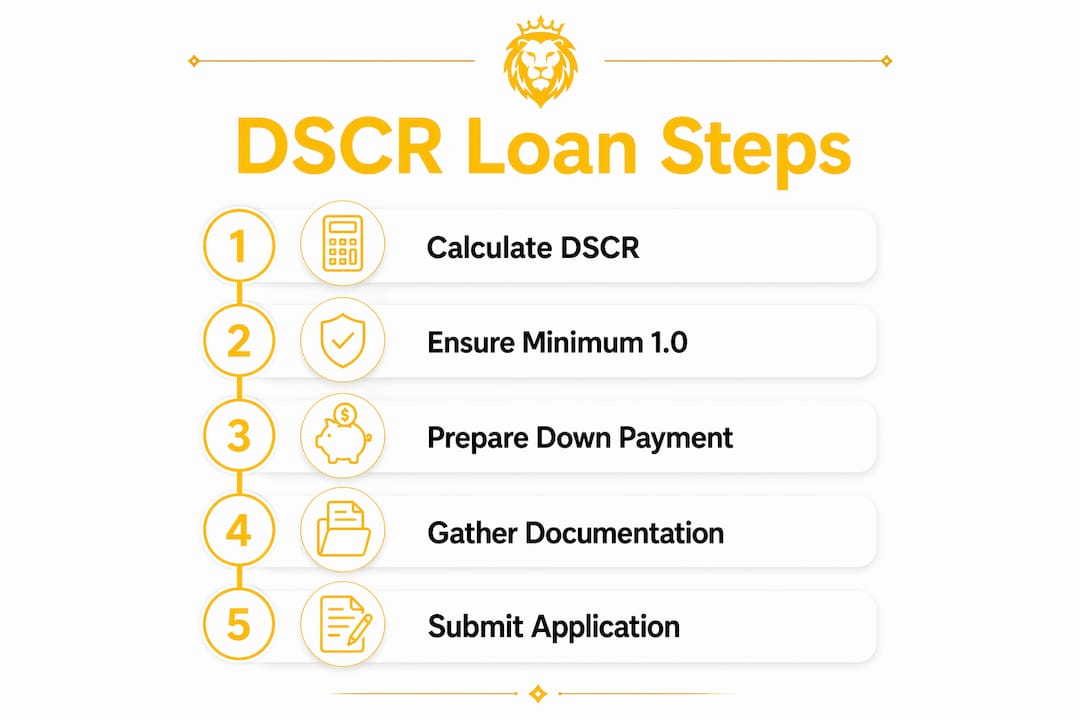
DSCR qualification is built on a single formula: gross monthly rental income divided by total monthly debt service. The result is the DSCR ratio. A ratio of 1.0 means the property breaks even. A ratio above 1.0 means it generates a surplus.
Minimum DSCR is 1.0 for most programs, with 1.25 preferred by lenders seeking stronger cash flow coverage. Some programs accept ratios between 0.75 and 0.99 when borrowers compensate with larger down payments or higher reserves. That flexibility matters for foreign investors entering markets where yields are compressed.
Down payment requirements for foreign nationals are higher than for domestic borrowers. Standard down payments run 25%–30%, translating to a loan-to-value ratio of 70%–75%. The higher equity requirement reduces lender risk when borrower documentation is limited to foreign sources.

Reserves are a firm underwriting requirement. Borrowers must hold 6–12 months of PITIA reserves in liquid assets. PITIA stands for principal, interest, taxes, insurance, and association dues. These reserves can sit in foreign bank accounts, provided the lender can verify and document them properly.
DSCR loans do not require U.S. income verification or U.S. credit scores. Lenders instead accept international credit reports, foreign bank statements, and in some cases alternative documentation such as rent payment history. You do not need to file U.S. tax returns to qualify.
Use the DSCR ratio calculator at Jaken Finance Group to run your numbers before submitting an application.
Pro Tip: Start collecting 2–3 months of bank statements immediately. Seasoned funds with no large unexplained transfers are a hard underwriting requirement. Moving money close to closing triggers compliance reviews and delays.
What property types qualify for foreign national DSCR loans?
Eligible property types cover most standard investment categories. Lenders accept the following:
- Single-family residential homes (1 unit)
- Small multifamily properties (2–4 units)
- Warrantable condominiums
- Short-term rentals with documented rental income or a market rent appraisal
Eligible properties include single-family, 2–4 unit, condos, and short-term rentals, with market rent appraisals accepted when a property is vacant or newly acquired. That appraisal substitutes for actual lease income during underwriting. It gives foreign investors the ability to finance a property before it has a tenant in place.
Minimum property values vary by program, but most lenders set a floor around $100,000. Loan amounts range from $100,000 to over $5,000,000 depending on the program, which covers everything from a starter rental in the Midwest to a luxury short-term rental in Florida or Arizona.
Short-term rental income qualifies on most programs when supported by platform data or a comparable market rent analysis. Lenders typically apply a vacancy factor to short-term rental projections, so the qualifying income is conservatively adjusted.
Pro Tip: Forming a U.S.-based LLC before closing simplifies title transfer, provides liability protection, and is standard practice for foreign investors. Lenders will still require a personal guarantee from the principal, so the LLC does not replace your personal obligation.
What challenges do foreign nationals face with DSCR loans?
The absence of a U.S. credit history is the most common concern foreign investors raise. It is not a disqualifier. Most DSCR lenders accept foreign credit reports from established international bureaus. When no formal credit report exists, lenders may accept alternative references such as utility payment history, rent records, or bank reference letters.
The real underwriting challenges are documentation timing and fund sourcing. Key issues include:
- Large wire transfers close to closing. Lenders flag unexplained deposits. Any transfer above a threshold triggers a paper trail requirement.
- Unseasoned funds. Money that arrived recently without a documented source creates compliance problems. Two to three months of clean statements resolve this.
- Incomplete foreign bank documentation. Statements must be translated into English and certified. Missing pages or partial records stall underwriting.
- DSCR ratios below 1.0. A ratio between 0.75 and 0.99 does not automatically disqualify a borrower, but it requires a larger down payment or additional reserves to compensate.
Qualification depends entirely on property rental income, not on personal income or tax returns. That is the structural advantage of DSCR financing for foreign nationals. Your income abroad is irrelevant to the underwriting decision.
"DSCR loans in 2026 are the fastest and simplest financing path for foreign nationals lacking U.S. credit or income documentation. Qualification depends on property income alone, which removes the two biggest barriers international investors face with conventional mortgage products."
An established credit profile abroad, even without any U.S. credit history, improves your program options and the terms a lender will offer. Prepare your international credit documentation before you identify a property.
How to apply and close a foreign national DSCR loan
The application process follows a defined sequence. Preparing documents in advance is the single most effective way to shorten the timeline.
| Document | Requirement |
|---|---|
| Valid passport | Government-issued, unexpired |
| Foreign address proof | Utility bill or bank statement showing home address |
| Bank statements | 2–3 months, translated and certified if not in English |
| Reserves documentation | 6–12 months PITIA in liquid accounts |
| Purchase contract | Signed agreement for the subject property |
| LLC formation documents | If taking title through a U.S. entity |
| Foreign credit report | Translated; alternative references accepted if unavailable |
LLC formation should happen early. Title companies and lenders need the entity documents before closing, and formation timelines vary by state. Delaware and Wyoming are common choices for foreign investors because of their favorable LLC statutes and low annual fees.
Specialist brokers who manage international documentation reduce approval delays significantly. A broker familiar with foreign national DSCR programs knows which lenders accept which documentation formats, which reduces back-and-forth and keeps the timeline on track.
Jaken Finance Group connects foreign investors to DSCR loan programs across the country, with access to a wide range of lender options suited to non-resident borrowers. The team handles the documentation coordination that typically creates delays for international buyers working with generalist lenders.
Closing timelines for foreign national DSCR loans are longer than for domestic borrowers, typically running 30–45 days when documentation is complete at submission. Incomplete files extend that timeline significantly.
Key Takeaways
Foreign national DSCR loans qualify based on property rental income alone, making them the most accessible U.S. financing option for international investors without domestic credit or income documentation.
| Point | Details |
|---|---|
| DSCR ratio requirements | Minimum 1.0; preferred 1.25; ratios of 0.75–0.99 accepted with compensating factors. |
| Down payment and LTV | Foreign nationals typically put down 25%–30%, resulting in a 70%–75% LTV. |
| Reserve requirements | Hold 6–12 months of PITIA in liquid assets; foreign bank accounts are acceptable. |
| Credit documentation | No U.S. credit score required; foreign credit reports or alternative references accepted. |
| Fund seasoning | Provide 2–3 months of clean bank statements; avoid large unexplained transfers before closing. |
What I've learned working with foreign national DSCR borrowers
The biggest misconception I see is that foreign investors assume they need a U.S. credit score or a U.S. bank account to get started. Neither is true. The DSCR structure was built specifically to sidestep those requirements. The property does the qualifying work.
What actually derails deals is documentation timing. Investors who move funds two weeks before closing, or who submit partial bank statements, create compliance problems that push closings back by weeks. The fix is simple: treat your bank statements and fund sourcing as a 90-day preparation exercise, not a closing-week task.
In 2026, lender appetite for foreign national DSCR loans is strong. The programs have matured, documentation standards are clearer, and more lenders are actively competing for this borrower segment. That competition benefits you as a borrower. Rates and terms are more favorable than they were three years ago.
My practical advice: work with a specialist who has closed foreign national DSCR transactions before. A generalist lender will accept your application and then spend three weeks figuring out how to process your foreign bank statements. A specialist has the workflow built. That difference can mean the gap between closing on time and losing a deal.
DSCR financing is a serious tool for building a U.S. real estate portfolio as an international investor. The structure rewards properties that perform, not borrowers who can produce the most paperwork.
— Jason Taken
Financing options for foreign nationals at Jaken Finance Group
Foreign investors who need a lender that understands non-resident documentation requirements will find that most generalist lenders are not equipped for the process.
Jaken Finance Group works with foreign national borrowers across the United States, connecting investors to asset-based lending programs that prioritize property performance over personal credit profiles. The team has experience coordinating international documentation, fund verification, and LLC structuring for non-resident buyers. Whether you are purchasing a single-family rental in Arizona or a short-term rental in Florida, Jaken Finance Group provides direct access to programs built for your situation. Contact the team at Jaken Finance Group to review your loan parameters and get a clear picture of your qualification options.
FAQ
What is a foreign national DSCR loan?
A foreign national DSCR loan is a U.S. investment property mortgage that qualifies the borrower based on the property's rental income rather than personal income or U.S. credit history. It is designed for non-resident investors who lack domestic financial documentation.
What DSCR ratio do foreign nationals need to qualify?
Most programs require a minimum DSCR of 1.0, with 1.25 preferred. Ratios between 0.75 and 0.99 may qualify with compensating factors such as a larger down payment or additional reserves.
Do foreign nationals need a U.S. credit score for a DSCR loan?
No. Most DSCR programs for foreign nationals accept international credit reports or alternative documentation such as rent payment history and bank reference letters in place of a U.S. credit score.
How much do foreign nationals need to put down on a DSCR loan?
Standard down payments run 25%–30% of the purchase price, resulting in a loan-to-value ratio of 70%–75%. Higher down payments can compensate for lower DSCR ratios or limited credit documentation.
Can foreign nationals use an LLC to take title on a DSCR loan?
Yes. Forming a U.S.-based LLC for investment property ownership is common and recommended for liability protection. Lenders will require a personal guarantee from the principal of the LLC.