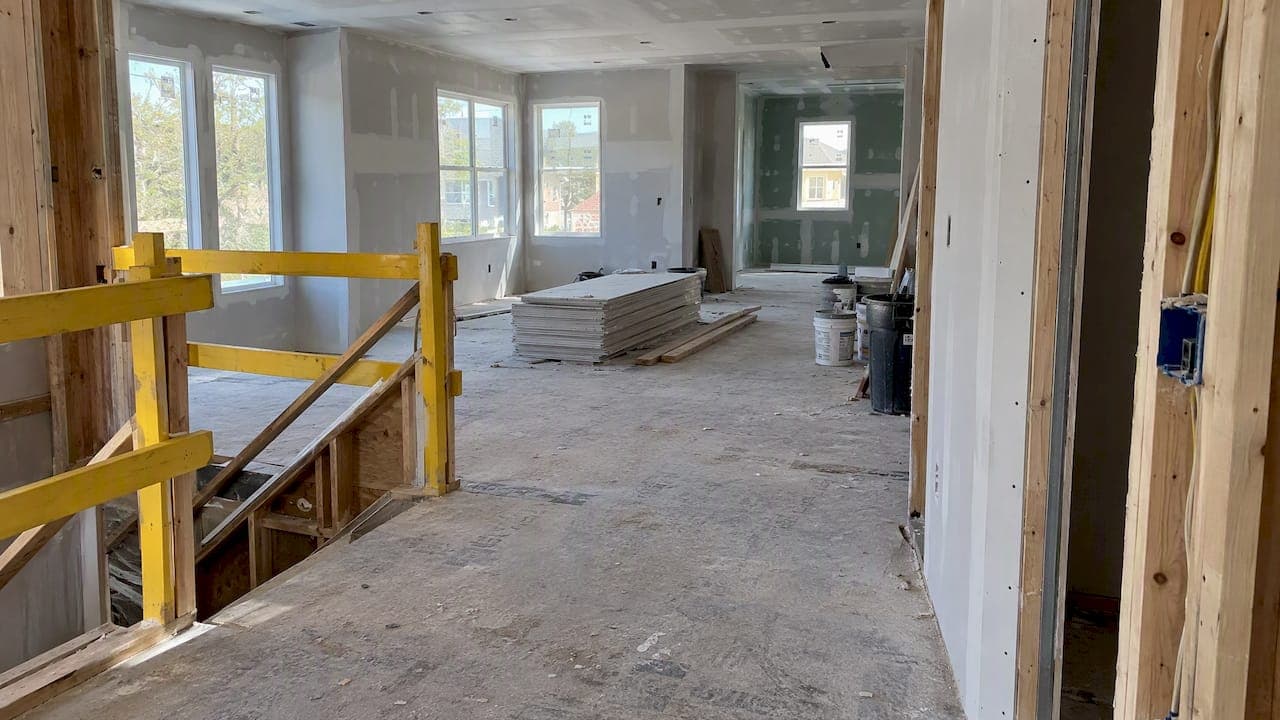
A construction completion loan is short-term financing, advanced in draws, that carries an unfinished build to a usable or saleable state. It can be construction-only or part of a construction-to-permanent structure. The deciding factor is the gap: the distance between what remains to be spent and the funds you can still draw.
TL;DR:
- Interest generally accrues only on funds already drawn, but disbursements follow verified milestones rather than cash needs, and lenders may retain funds until completion.
- Two closings require fresh underwriting and completion evidence; single closing financing faces strict timing and document age limits, so delays can trigger requalification.
- Budget the gap as remaining costs minus available loan funds, including carry, closeout, commissioning, and restored contingency, not just construction materials and labor.
- NAHB reported an 11.82% weighted average effective rate for speculative residential construction in Q2 2026; points and fees raise costs beyond contract rates.
- Hard money or bridge financing can move faster at higher effective cost, while a HELOC or portfolio loan may suit small gaps backed by equity.
Table of Contents
- How do completion loans work on a build in progress?
- Who needs completion financing?
- What is the difference between single-close and two-close conversion?
- What do completion loans really cost?
- What do lenders need to see before approval?
- Which financing options can finish a build mid-construction?
- What should you have ready before contacting a lender?
- How we approach completion financing for investors
- Ready to finish the build? Here is how to reach us
- FAQ
- Sources
How do completion loans work on a build in progress?
Completion financing follows the same logic as any construction loan. According to the Consumer Financial Protection Bureau, funds are advanced in scheduled draws as work is verified, and interest is generally charged only on the amounts actually advanced, not the full commitment.
- Each draw is released after an inspector or lender representative confirms a milestone.
- Interest accrues on the drawn balance, so early payments stay lower.
- A construction-only loan ends at completion and must be repaid or refinanced.
- A construction-to-permanent loan converts to a long-term mortgage once the work is finished.
Disbursements follow the draw schedule, not your cash needs. For a closer look at that schedule, see our ground-up construction loan draw schedule explainer.
Who needs completion financing?
Completion capital serves a narrow group of borrowers, and most of them arrive at it mid-project rather than by plan.
- Investors finishing a fix-and-flip whose budget ran past the original rehab loan.
- Owners of stalled builds whose original lender will not advance more funds.
- Builders of new construction who need capital for the final phase before sale or conversion.
- Owners of large renovations that function like new builds.
That last group deserves attention. A renovation that touches structure, systems and finishes across the whole property often fits a construction-to-permanent loan better than a small rehab loan, because the draw controls and permanent takeout are built in. When the clock matters more than the rate, hard money or bridge capital becomes the deciding option, since a half-built property accrues carrying costs every week. Our overview of construction loans versus bridge loans shows where each fits.
What is the difference between single-close and two-close conversion?
The structure you choose determines how and when construction debt becomes permanent debt.

A single-closing transaction closes construction and permanent financing at once. Fannie Mae's guidance subjects these loans to strict timing rules, including construction-period limits and age limits on appraisals and documentation. A two-closing transaction closes interim financing first, then a separate permanent refinance at completion, which a different lender may underwrite.
At the finish line, expect this workflow:
- The builder completes the work and all construction costs are paid.
- Mechanic's liens are satisfied, with lien waivers collected.
- An appraiser delivers Form 1004D, the Appraisal Update and Completion Report.
- The borrower provides a Certificate of Occupancy or equivalent, which Fannie Mae's conversion rules tie to completion.
- The lender converts or delivers the permanent loan.
Pro Tip: When a new completion lender sits alongside an existing senior lender, settle in writing who inspects, who funds first and how retainage is released before closing.
What do completion loans really cost?
The contract rate rarely tells the whole story. Points and fees raise the effective cost, and the NAHB's Acquisition, Development and Construction survey reports weighted average effective rates for speculative single-family construction near 11.82% in Q2 2026, along with tightening credit for land and development. Comparative terms, including LTC, LTV and loan length, are laid out in the full AD&C report.
Three terms drive affordability:
- Contract rate versus effective rate: the effective rate folds in points and fees.
- Loan-to-cost (LTC) and loan-to-value (LTV): these cap how much a lender will advance against project cost or finished value.
- The gap: remaining costs minus remaining loan availability.
Borrowers underestimate the gap because they count hard costs only. As Fannie Mae's practitioner guidance notes, carry, closeout, commissioning and restored contingency often surprise borrowers more than unit costs do.
Points and fees are a core part of any comparison, as the NAHB survey indicates.
What do lenders need to see before approval?
Underwriting a completion loan is documentation-heavy. Prepare these items in order:
- Detailed construction plans and a line-item cost estimate.
- Contractor underwriting: license, insurance and track record.
- A proposed draw schedule tied to verifiable milestones.
- Current credit and income documents.
- An appraisal, or a plan for Form 1004D at completion.
- A mechanism for clearing liens, such as lien waivers at every draw.
Dates matter. Credit and income documents may need to be current, and appraisal windows are similarly tight, so a delayed build can force requalification. Fannie Mae's single-closing rules spell out these age limits.
Pro Tip: Calendar every document's expiration date against the projected completion date, and refresh early rather than at the last draw.
Lenders also review disclosure obligations. Under the CFPB's TRID guide for construction loans, construction-only and construction-to-permanent loans may be disclosed combined or separately, with special treatment for construction-phase fees and projected payments.
Which financing options can finish a build mid-construction?
Several routes exist, and each trades speed against cost and paperwork.
- Mid-construction refinance (two-closing): replaces the existing loan and resets underwriting, which means full documentation and completion evidence. We cover this route in our mid-construction refinance resource.
- Hard money or bridge completion loan: fast and flexible, with a higher effective cost. Read more on our bridge loan page.
- Single-closing construction-to-permanent: suited to new builds planned from the start, with strict timing and disclosure rules.
- HELOC or portfolio product: sensible for small finish gaps against equity you already hold.
If a rental hold follows completion, construction-to-DSCR refinancing is a common takeout. Include finish-line extras in your budget too: a solar installation, for example, adds its own financing cost, and a guide to comparing APR and total loan cost for solar helps you price it.
What should you have ready before contacting a lender?
A lender-ready package shortens approval. Assemble this before the first call:
- A project budget with contingency and a calculated gap.
- Contractor license and certificate of insurance.
- An approved draw schedule.
- Recent credit and income documents, inside the age windows.
- An appraisal or a plan for Form 1004D.
- A process for collecting lien waivers.
Expect the lender to hold back a portion of funds until completion conditions are met, and plan your timeline around inspection cadence rather than your own pace.
How we approach completion financing for investors
Our lending is asset-based and built around speed. We underwrite to the property's value rather than a minimum credit score, and our bridge, hard money and new construction products are the ones investors most often use to finish a stalled or underfunded build. We advance funds in draws, aim to close quickly, and keep the draw process organized so the project timeline does not stall waiting on paperwork. Investors who need to move in days, not months, are the borrowers this structure serves best.
Ready to finish the build? Here is how to reach us
If a completion gap is holding up your project, send us the details and we will map the fastest route. Include:
- The project address and current stage of construction.
- The remaining budget and your calculated gap.
- Your contractor's contact information.
- Your desired closing timeline.
On first contact, we pre-qualify the deal, outline the documents we need and confirm realistic timing. Start with our loan options page, where our fix-and-flip, bridge and new construction loans are listed with their published rates.

FAQ
What does a construction loan cover?
A construction loan covers the costs of building or finishing a project, released in draws as work is verified. Per the CFPB, interest is generally charged only on funds actually advanced.
How do you get approved for a construction-to-permanent loan?
You provide detailed plans, cost estimates, contractor underwriting and current credit and income documents. Lenders also expect a Certificate of Occupancy and a completion report before the loan converts to permanent financing.
Why do effective rates run higher than contract rates?
Points and fees add cost beyond the stated interest rate. The NAHB survey shows effective construction rates well above advertised contract rates.
What is the gap in completion financing?
The gap is the difference between the remaining cost to finish and the loan funds still available. It includes carry, closeout and restored contingency, not only hard costs.
Sources
- What is a construction loan? | Consumer Financial Protection Bureau
- Nahb
- TILA-RESPA Integrated Disclosures for Construction Loans