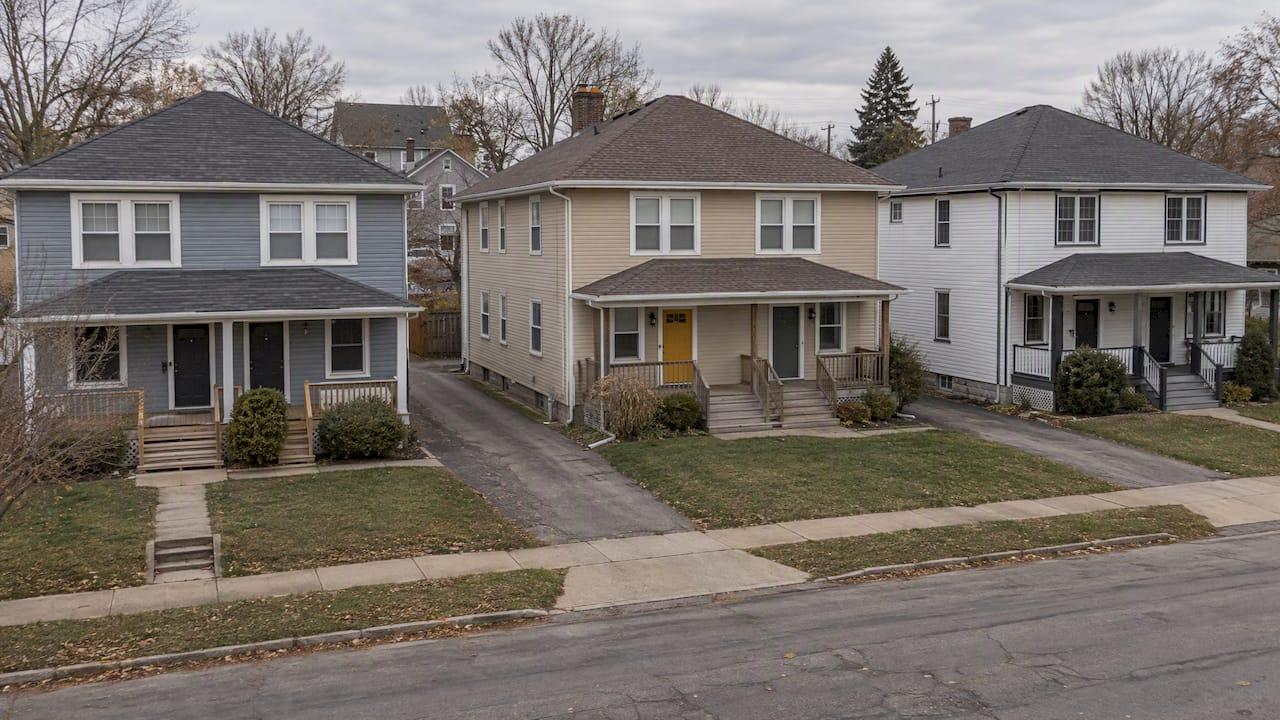
A blanket loan is a single mortgage secured by two or more properties. Investors use it to finance or refinance a portfolio, a group of flips or a subdivision under one note, one lender and one payment. The structure suits investors with real portfolio experience, meaningful equity and a plan for each property. It carries higher down payments, shared-collateral risk and, in many cases, a balloon maturity. This guide covers how the loan works, what lenders ask for, where it goes wrong and what to compare it with.
TL;DR
- A blanket mortgage pledges multiple properties as collateral for one loan, and a release clause can let you sell individual properties without retiring the whole balance.
- Typical requirements include strong financials, cash reserves, a documented investing track record and, on income property, a portfolio-level debt service coverage ratio (DSCR) of about 1.20 or higher.
- Down payments commonly run 25% to 50% of the combined value of the financed properties, and some loans carry balloon payments.
- Cross-collateralization is the main risk: trouble on one property can expose the others.
- Investors who want speed and asset-based underwriting can compare a blanket structure with separate bridge, fix and flip or DSCR loans.
Table of Contents
- What a blanket loan is
- How a blanket loan works
- When a blanket loan fits
- Blanket loan requirements
- Costs to compare before you sign
- Risks of cross-collateralization
- Insurance and lender risk review
- Alternatives to a blanket loan
- Our perspective
- Financing your portfolio with Jaken Finance Group
- How to apply for a blanket loan
- FAQ
- Sources
What a blanket loan is
A blanket loan, also called a blanket mortgage, covers two or more real estate properties held together as collateral. Instead of five mortgages with five closings, five payments and five servicers, the investor has one loan agreement and one lender relationship. Experian's guide notes that investors, developers and house flippers are the most common borrowers.
The properties can be a mix of types, depending on the lender: single-family rentals, small multifamily, condos, commercial buildings or lots held for development. The loan is sized against the combined value of the collateral, not against each property on its own.
The structure differs from a standard mortgage in three ways:
- One note, many properties. All collateral secures the entire balance.
- Release provisions. The loan documents can spell out how individual properties leave the pool.
- Portfolio underwriting. The lender reviews the borrower, the combined cash flow and the collateral as a group.
How a blanket loan works
One payment, one servicer
Pooling properties under one loan can reduce the number of monthly payments and escrow accounts to one obligation, according to Experian's description of the product. For an investor managing a dozen units, that is a real administrative saving, and it simplifies reporting to partners and accountants.
Partial release clauses
The release clause is the feature that makes a blanket loan workable for investors who sell. Most blanket mortgages include a release clause that frees the borrower from the portion of the loan that has been paid, and sale proceeds may be used to buy another property. Depending on the loan terms, a refinance may or may not be needed when individual properties are sold.
In practice, the release price is negotiated up front. Lenders often set it above the property's pro rata share of the loan, for example by requiring a payment of a stated percentage of the allocated loan amount per property. Read this clause before anything else. A loan that has no release clause, or a release price you cannot meet, locks the whole portfolio in place until payoff.
Terms and maturity
Many blanket loans have short or medium terms with a balloon payment, which means you pay the balance in full or refinance before the term ends. Plan the exit when you sign: a sale of the properties, a refinance into long-term DSCR financing or a paydown from other capital.

When a blanket loan fits
Blanket structures fit a few specific situations:
- Developers with a subdivision. A developer buying land to subdivide and sell in lots can use one loan and release each lot at its sale.
- Flippers buying several properties. An investor acquiring multiple properties to renovate and resell can finance the batch together and release each house at closing.
- Landlords consolidating a portfolio. An owner of several rentals can replace scattered loans with one, and may pull out trapped equity at the same time.
- Builders and build-to-rent operators. Several lots or phases can sit under one facility.
A blanket loan is a poor fit for an investor with one or two properties, thin reserves or no plan for the maturity date. In those cases, separate loans keep each asset independent.
Blanket loan requirements
Lenders set their own standards, but the same items come up repeatedly.
| Requirement | What lenders typically look for |
|---|---|
| Borrower strength | Strong credit, substantial cash reserves and a documented history of successful investing |
| Down payment | 25% to 50% of the value of all financed properties |
| Debt service coverage | A DSCR of 1.20 or higher for the overall portfolio on income properties |
| Leverage limits | Maximum loan-to-value (LTV) limits and net worth requirements set in the lender's credit policy |
| Property detail | Intended use, location and condition of each property, and proof of experience for a development |
The OCC's Comptroller's Handbook on commercial real estate lending describes the underwriting framework banks use: maximum LTV limits and borrower net worth requirements written into policy, plus a global cash-flow analysis across the borrower's entities and assets. Private and asset-based lenders are not bound by bank policy, so their standards can differ, but the same questions about collateral, cash flow and experience drive their decisions.
Documents to prepare
A blanket application is heavier than a single-property file. Expect to assemble:
- A property schedule listing each asset, its value, existing debt, rents or projected rents and condition
- Financial statements for the borrower and any guarantors
- Proof of liquidity, such as bank and brokerage statements
- Entity documents for any LLCs that hold title
- Leases, rent rolls and operating statements for income properties
- Budgets, scopes of work and timelines for renovation or construction collateral
The handbook describes this package as a property worksheet, borrower and guarantor financial statements and proof of liquidity, reviewed together in a global cash-flow analysis.
Costs to compare before you sign
A single closing sounds cheaper, and it often is for third-party work and time. But closing costs tend to be calculated as a percentage of the total loan amount, so origination fees can be higher at closing than for smaller, separate loans. Legal fees, appraisals and inspections also depend on the number and type of properties and can exceed single-property costs.
When you compare offers, line up the same items for each:
- Down payment or equity requirement as a percentage of combined value
- Interest rate and whether it is fixed or adjustable
- Origination points and other lender fees
- Appraisal, legal and title costs across all properties
- Loan term and balloon amount
- Release price per property and any minimum paydown
- Prepayment terms
Run the numbers on the whole structure, not only the rate. A lower rate with a high release price can cost more than a higher rate with clean release terms if you plan to sell within a year.
Risks of cross-collateralization
Because every property secures the whole loan, a default on one property can trigger remedies across the entire portfolio. Experian's guide also notes that shared collateral can expose one or all of the properties to foreclosure after missed payments. A vacancy spike on one building, or a flip that stalls, affects the standing of properties that are performing well.
Other risks to price in:
- Balloon maturity. If refinancing markets tighten when the loan comes due, you may have to sell on the lender's timeline.
- Recourse carve-outs. Even non-recourse loans can contain "bad act" provisions that create full recourse liability for fraud, waste or unauthorized transfers.
- Concentration. One lender, one maturity date and one covenant package apply to the whole portfolio.
For a deeper look at how lenders structure this, see our explanation of cross-collateralization and our article on where the risk sits in cross-collateral loans.
Insurance and lender risk review
Lenders underwriting a portfolio look closely at whether every collateral property is properly insured, because a loss at one property affects the entire loan. Coverage type, valuation basis and named-lender requirements vary by property class. A summary of commercial real estate insurance requirements helps you confirm coverage before the lender asks. For rentals, our video on rental insurance lenders require explains why replacement cost coverage comes first.
Alternatives to a blanket loan
A blanket loan is one of several ways to finance multiple properties. The right choice depends on how long you will hold, how fast you must close and how much cross-default exposure you accept.
| Structure | Best for | Trade-off |
|---|---|---|
| Blanket loan | Several properties financed or refinanced together | Shared collateral, larger down payment, possible balloon |
| Separate DSCR loans | Long-term rentals held individually | More closings and payments, but each asset stands alone |
| Bridge loan | Short-term acquisition or transition | Higher rate, short term, needs an exit |
| Fix and flip loan | Renovation projects with a resale exit | Short term, draws tied to rehab progress |
| Portfolio refinance | Consolidating existing rental debt | Requires seasoned, stabilized properties |
For a side-by-side view, use our comparison of investment property loans.
Our perspective
We lend to investors who prize speed and flexibility, and the question we hear about blanket structures is rarely "can I get one?" It is "should I put all of this on one note?" Our answer depends on the exit.

A blanket loan makes sense when the properties share a business plan: a rental portfolio headed for a long-term refinance, or a group of lots that will sell one by one with clear release terms. It makes less sense when the properties have different timelines and risk profiles, because the weakest asset sets the risk for the strongest.
Our approach is asset-based. We underwrite to the value and income of the property rather than to a minimum credit score, and we offer leverage up to 100% of cost on qualifying projects, deferred payment options and closings in as few as 7 to 10 days. For investors who want portfolio financing without full cross-collateral exposure, we also finance multiple rentals through blanket DSCR loans and portfolio refinances. Where the properties are better served separately, we say so. A loan that fits the business plan performs better for borrower and lender alike.
— Jason Taken
Financing your portfolio with Jaken Finance Group
Jaken Finance Group provides asset-based loans to real estate investors across the United States. Published rate ranges on our loan options page are 8.99% to 13.5% for fix and flip, bridge and new construction loans, and 5.75% to 10.5% for DSCR rental loans. Commercial property loans are also listed at 8.99% to 13.5% on our commercial property loans page. Terms depend on the property and the deal.

Need financing for several properties at once? Send us the property schedule and your timeline, and we will tell you whether a blanket, portfolio or separate-loan structure fits. Start at our commercial real estate financing page, or review down payment requirements for commercial loans first.
How to apply for a blanket loan
- List every property. Include value, debt, income, condition and plan.
- Decide on the exit. Choose sale, refinance or hold, and set the timeline.
- Calculate portfolio DSCR. Divide combined net operating income by combined debt service, and compare it with the 1.20 benchmark.
- Gather documents. Financial statements, liquidity proof, entity documents, leases and budgets.
- Request the release terms in writing. Ask for the per-property release price before you commit.
- Compare structures. Price a blanket loan against separate loans on the same properties.
- Close and calendar the maturity. Set reminders well ahead of any balloon date.
FAQ
What is a blanket loan in real estate?
A blanket loan is one mortgage secured by two or more properties. It replaces several separate loans with one payment and one lender. Release clauses can let you sell individual properties without paying off the whole loan.
What are the requirements for a blanket loan?
Lenders generally want strong financials, cash reserves and a documented investing record. Income properties are often tested against a portfolio DSCR of about 1.20 or higher. Down payments commonly range from 25% to 50% of the combined value, and requirements vary by lender.
Can I sell one property under a blanket loan?
Usually, if the loan includes a release clause. The clause sets the amount you must pay to free that property, and the price is negotiated at closing. Without a release clause, you may have to refinance or pay off the entire loan.
Are blanket loans better than separate loans?
Not always. One loan means fewer closings and one payment, but shared collateral means trouble on one property can reach the others. Separate loans keep each asset independent at the cost of more administration.
Sources
- Blanket Mortgage: Meaning, Overview, Advantages and Disadvantages, Investopedia
- What Is a Blanket Mortgage?, Experian
- Commercial Real Estate Lending, Comptroller's Handbook, OCC